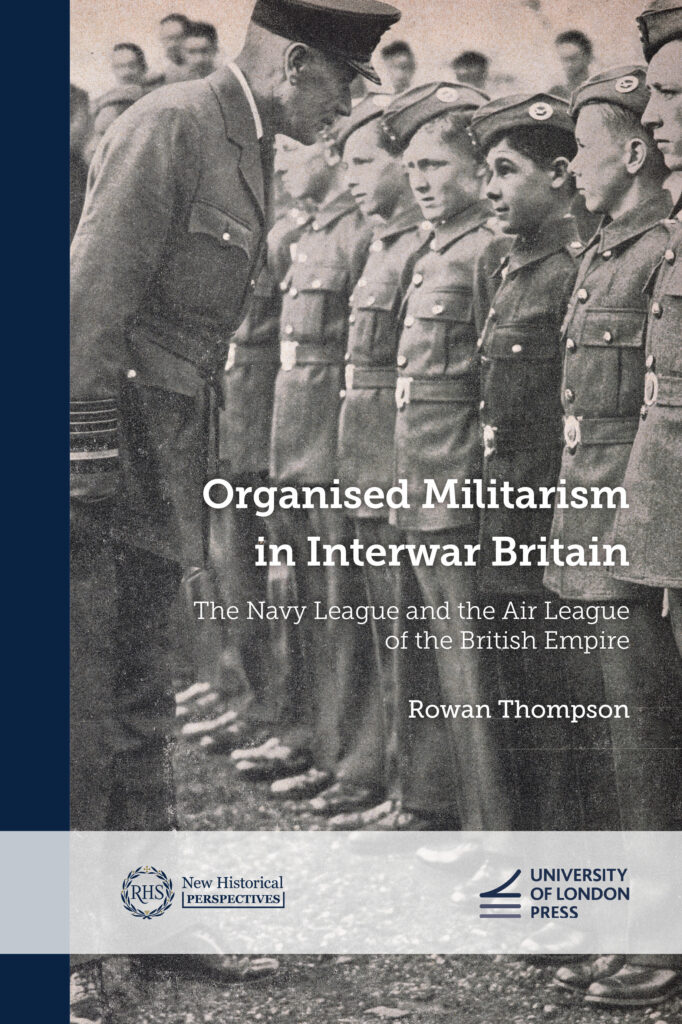
Organised Militarism in Interwar Britain

Organised Militarism in Interwar Britain

While militaristic and patriotic organisations formed an important part of Edwardian political culture, 1918 often marks a terminus for histories of organised militarism in Britain. Taking the end of the First World War as its starting point instead, this book is the first full-length study of militarism and militaristic associational culture in interwar Britain. It argues that militarism was able to survive the 1914–1918 conflict, despite the competing rise of liberal internationalism, pacifism and anti-war sentiment. Focusing on the ideas, aims and activities of the Navy League and the Air League of the British Empire – two extra-parliamentary organisations established to promote naval and aerial supremacy – the book examines how the Leagues negotiated the trauma of the First World War and how they contributed to the societal and military preparation for a second global conflict as the clouds of war gathered in the late 1930s.

Drawing on extensive archival research, the book explains how these Leagues mobilised broad public and political support and what the story of each organisation tells us about the impact of war on British society and culture, civil-military relations, political and private activism, military theatre and commemoration, youth, and the politics of disarmament, collective security, internationalism and national defence. In doing so, it demonstrates that martial and militaristic sentiment remained an important part of mainstream British political culture, despite the ravages of war.
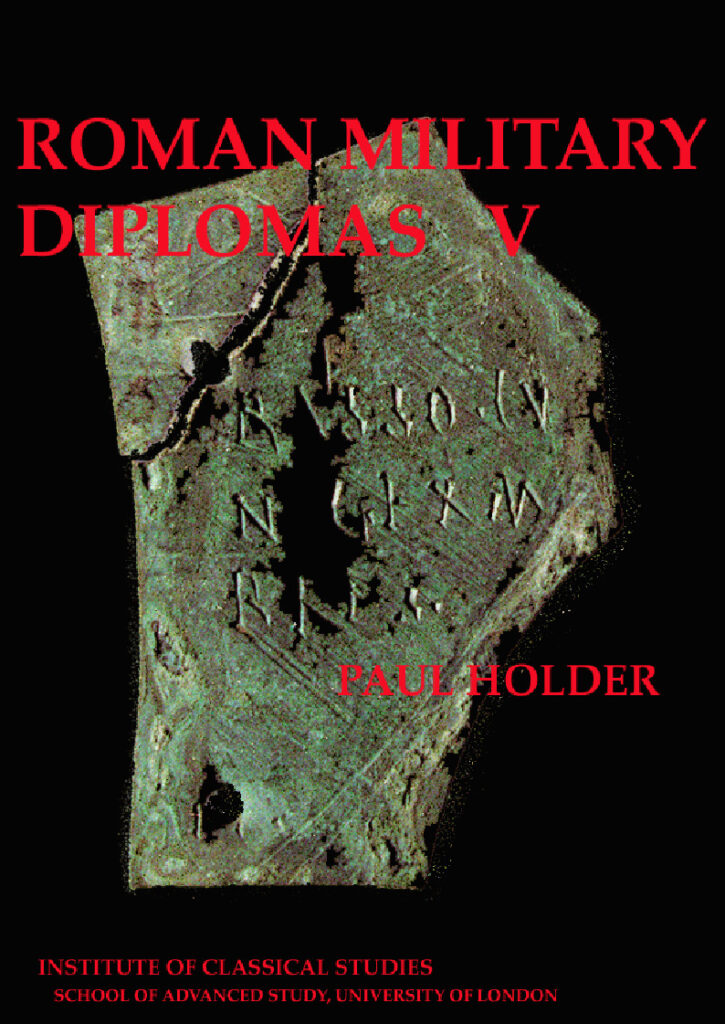
Roman Military Diplomas: v. 5

Roman Military Diplomas: v. 5

Roman Military Diplomas V presents 154 diplomas, and incorporates them into the updated chronologies witness lists and indexes which are a key part of the Roman Military Diplomas series.

A few of the diplomas were prepared by the late Margaret Roxan and some others were found after her death in preparation. Otherwise, the intention has been to bring together diplomas published by the end of 2003. But the large number included in this volume also reflects the active interest of collectors and the results of metal detecting.

The lively market in diplomas has, however, also had less benign consequences and the volume has an important appendix on the production of fakes.

The volume continues Margaret Roxan’s Roman Military Diplomas 1954-1977 (1978), 1978-1984 (1985) and 1985-1993 (1994) which were published as Occasional Papers of the Institute of Archaeology University of London, and Roman Military Diplomas IV (2003) which was published by the Institute of Classical Studies as BICS Supplement 82. RMD IV and RMD V follow the format and continue the numbering of the diplomas and the pagination of the previous volumes.

Documenting the Roman Army: Essays in Honour of Margaret Roxan (BICS Supplement 81)

Documenting the Roman Army: Essays in Honour of Margaret Roxan (BICS Supplement 81)

This volume places on record the proceedings of the colloquium held in honour of Dr. Margaret Roxan at the Institute of Classical Studies in May 2002. The theme of the colloquium was the written record of the Roman army, though the scope of the contributions embraced both historical and archaeological topics. Central to the discussions were the military diplomas recording grants of citizenship and other privileges to various categories of military personnel. The study and publication of these important records, of which several hundred are known, was Margaret Roxan’s life work. Over thirty years she worked as a dedicated scholar with minimal help from a few institutions. Her three edited collections of newly-found diplomas have acquired a scholarly authority that places her in a direct succession to Theodor Mommsen and Herbert Nesselhauf.