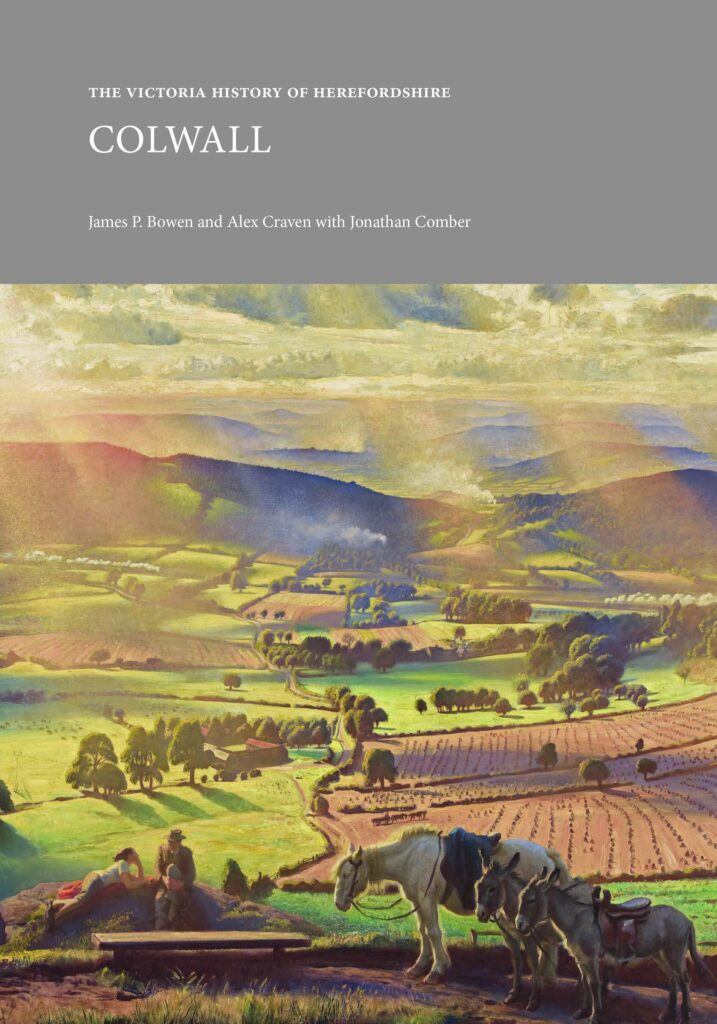
The Victoria History of Herefordshire: Cradley

The Victoria History of Herefordshire: Cradley

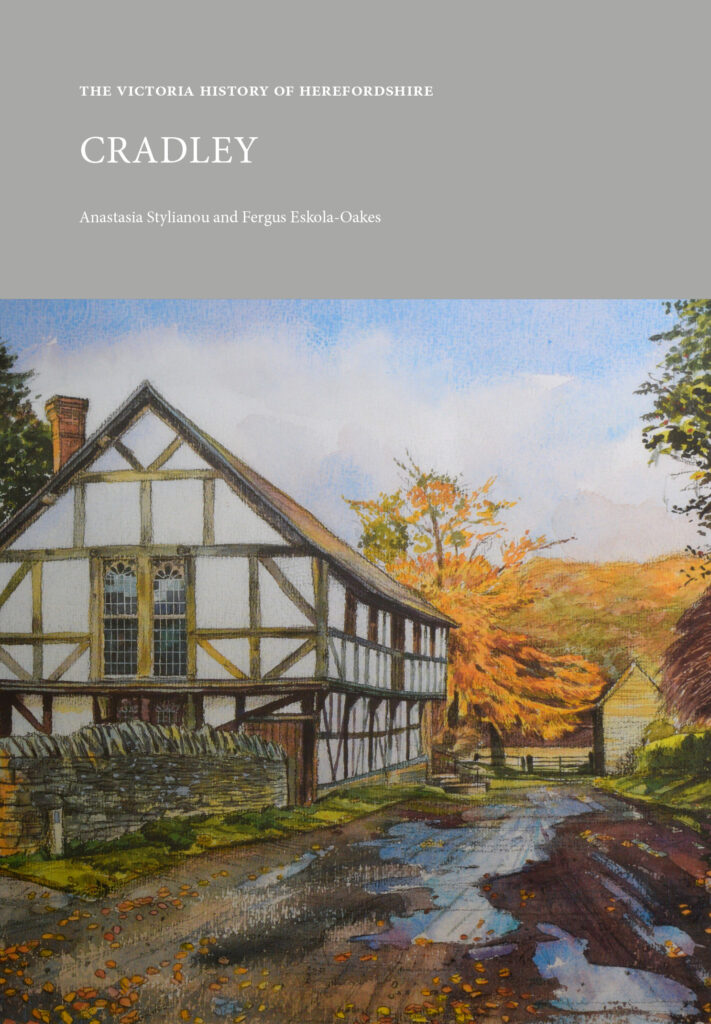
Scenic and rural, the parish of Cradley stretches down westwards from the Malvern Hills, bordered by Worcestershire to the north and east. It is one of the largest parishes in Herefordshire, and from the medieval period to the nineteenth century was populous and prosperous. Cradley manor was a valuable holding of the medieval bishops of Hereford. The ecclesiastical benefice, Anglo-Saxon in origin, was equally lucrative, frequently passing nepotistically to well-connected young priests; however, such connections did not prevent one thirteenth-century rector being outlawed for murder! The expanding number of manors in the parish, from the thirteenth century onwards, resulted in a fragmented model of land ownership and the development of a powerful body of wealthy yeomanry, shaping the distinctive character of the parish and its governance in the early modern period.

Drawing extensively on local archival sources, this volume analyses, among other topics, the centrality of agriculture to the parish’s story, charting Cradley’s socio-economic growth from the sixteenth to nineteenth centuries, before its subsequent decline. As such, this book constitutes an important contribution to English local history, exploring the prosperity that could be enjoyed by parishes in fertile Eastern Herefordshire, and the impact of changes in the national economy upon rural, agrarian communities.

The Victoria History of Hampshire: Dummer and Kempshott

The Victoria History of Hampshire: Dummer and Kempshott

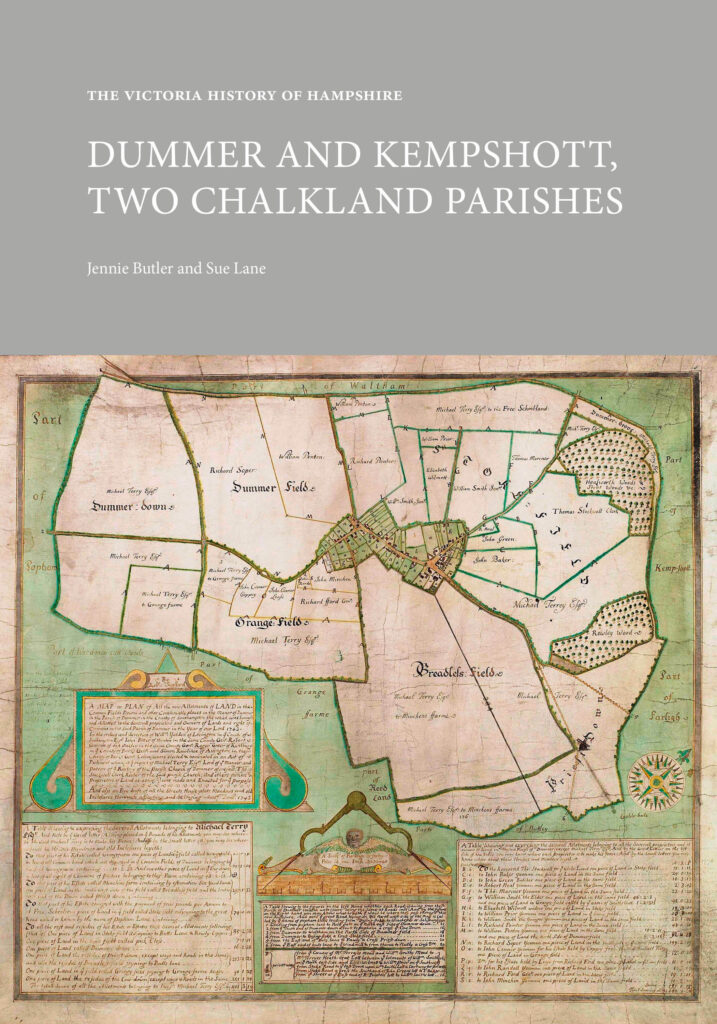
Dummer, a small parish on the chalk downlands south of Basingstoke, has a rich and well documented history which is of interest to a wide audience beyond Hampshire. Manorial records from the 16th century onwards provide a fascinating account of communal farming practices before enclosure of the land in 1743. The parish was distinguished by an unusual level of protestant non-conformity in the late 17th century, followed by the strongly evangelical outlook when John Wesley visited and preached in All Saints’ church in 1736 and 1739. The diaries of lord of the manor, Stephen Terry (d. 1867), which vividly bring to life Dummer and Kempshott in the 19th century, are excellent exemplars of the value of personal testimony in local history. Read about Jane Austen, the Swing Riots, emancipated enslaved Africans, trade unionist Joseph Arch and the childhood home of Sarah Ferguson, Duchess of York. At Kempshott, joined with Dummer in 1879, the Prince of Wales (future George IV) leased the grand mansion as a hunting lodge and transformed the social life for the gentry of north Hampshire.

Dummer and Kempshott, Two Chalkland Parishes provides a captivating picture of life throughout the centuries in small farming communities –­­­­ largely self-contained yet not untouched by outside or national events.

The Victoria History of Shropshire: Wem

The Victoria History of Shropshire: Wem

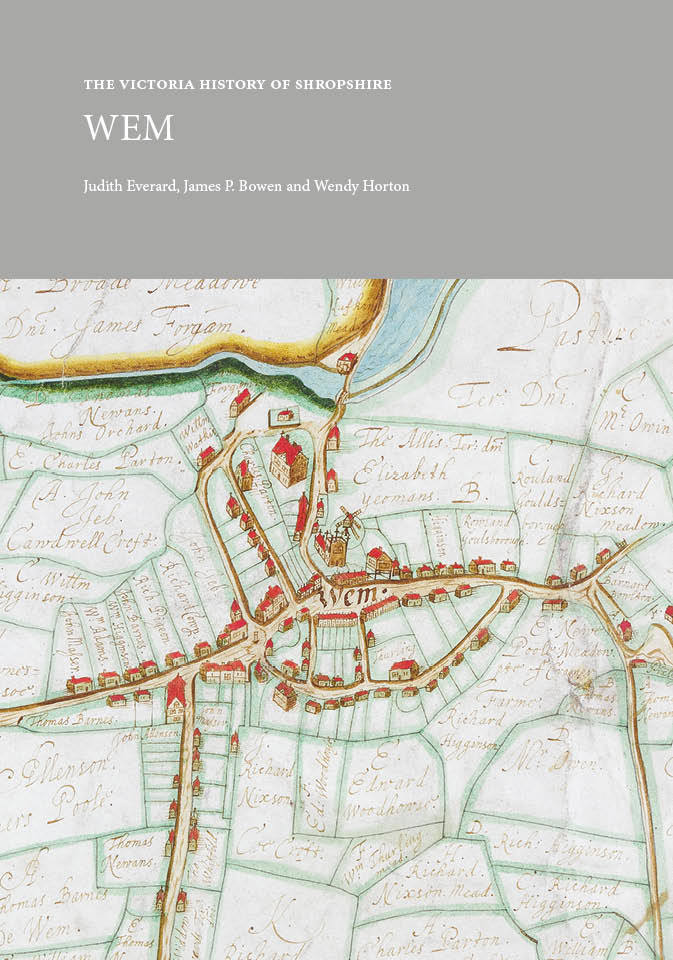
Wem lies on the North Shropshire Plain, about nine miles north of Shrewsbury. The centre of a much larger medieval manor and parish, the township consists of the small medieval market town and its immediate rural hinterland. Anglo-Saxon in origin, the town developed after the Norman Conquest, with a castle, parish church, market and water mill. The urban area of the township, ‘within the bars’, was distinguished from the rural, ‘without the bars’. Burgages were laid out, with a customary borough-hold tenure, but the borough never attained corporate status. Isolated from the main regional transport routes, Wem developed as a centre of local government and trade in agricultural produce, especially cheese. It was thrust onto the national stage in 1642 when Parliamentarians defeated a Royalist attack and held the town for the duration of the Civil War. The ‘great fire’ of 1677 then destroyed many of the existing buildings in the town centre, leading to its predominantly Georgian and Victorian appearance today. The decline in agricultural employment and the withdrawal of services and industries from small market towns like Wem in recent decades is a challenge, met by the advantage of the railway station to residents who work elsewhere but choose the town as a place to live.

Wem is the first ‘Short’ history to be produced by the Victoria County History of Shropshire. It is intended to establish a model for the histories of other market towns in Shropshire. This book tells the story of the town, its people and institutions: the built environment, landownership, economy, social and religious life and local government. It reveals for the first time that Wem was a planted medieval castle-town, and presents the evolution of its urban topography. It offers detailed accounts of the town’s medical profession and health care, trades and industries, and retailing, where Wem’s weekly produce market is enjoying a 21st-century revival.
The Victoria History of Essex: Southend

The Victoria History of Essex: Southend

The story of Southend’s growth as a town and resort in the Victorian and Edwardian periods is told here in this new history of Southend. As the nearest seaside resort to London, the town’s development has been determined in large part by the impact of its seasonal visitors. Yet it was the year-round movement of people from other parts of Essex, England and from the European continent in the late-nineteenth and early-twentieth-centuries that was to have a lasting effect on the character of the town.

Richly illustrated and drawing from original sources, this volume offers new perspectives on the developments that laid the foundations of Southend as we know it today. Its thematic chapters chart the physical expansion of housing in the period and the development of the resort’s infrastructure and economy, among other topics. Although concentrating on Southend and its resort, chapters on agricultural depression and land speculation, education, clubs and societies and unemployment expand the book’s regional focus to neighbouring areas, making this valuable reading for anyone interested in the history of Essex and the UK’s seaside towns.

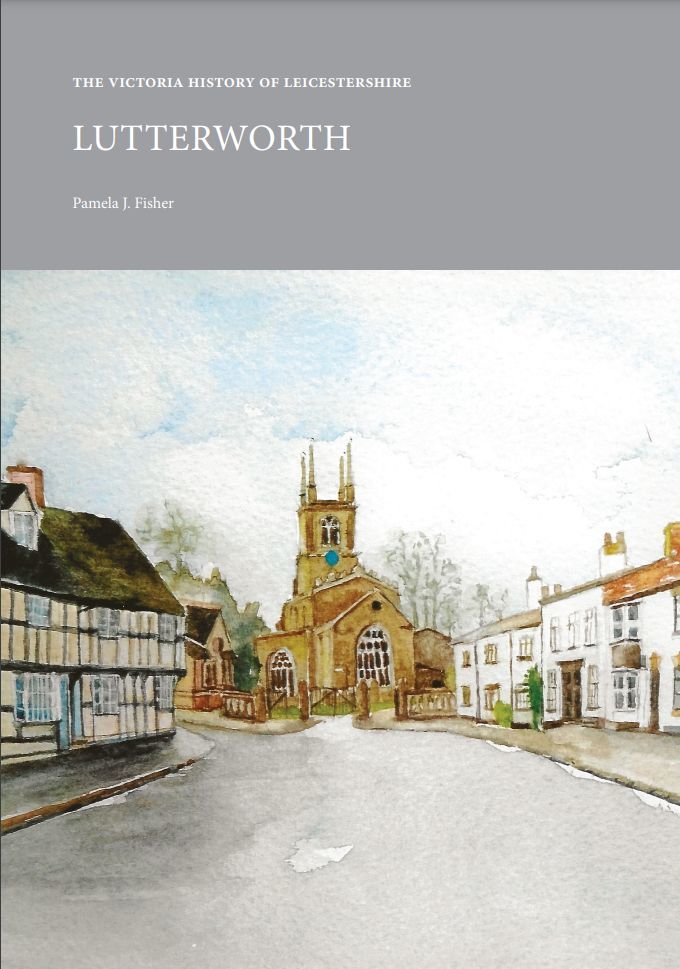
The Victoria History of Leicestershire: Lutterworth

The Victoria History of Leicestershire: Lutterworth

This publication, the fourth VCH Short from Leicestershire, tells the history of Lutterworth, a small market town in the south-west of the county. John Wyclif was the town’s rector from 1374 until his death in 1384, and the ongoing impact of his controversial writings so concerned the Church that his bones were disinterred and desecrated in 1428 on the instructions of the Pope. Lutterworth was also the birthplace of the jet engine, which was developed by Sir Frank Whittle between 1937 and 1942 in a disused foundry building in the town.

The evolution and development of Lutterworth from small beginnings before the Norman Conquest to the challenges posed today by its position as a key location for the modern logistics industry are described within these pages. Lutterworth’s people and their roles in shaping the economy, schools, churches, institutions and community life all feature strongly, as does the importance of the market in developing trade between the east and west midlands in the Middle Ages and the later effect of transport changes, including stagecoaches, railways and the modern motorway network on people, their jobs, housing and daily life.

The Victoria History of Middlesex: St Clement Danes, 1660-1900

The Victoria History of Middlesex: St Clement Danes, 1660-1900

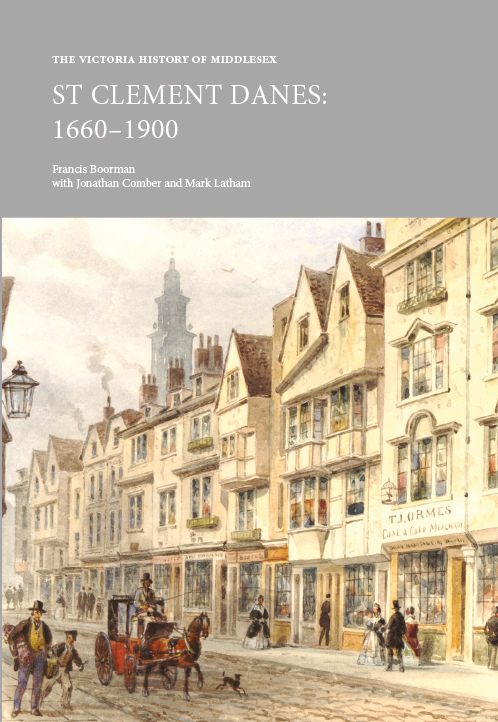
St Clement Danes, now the central RAF church in the Strand, is at the heart of the capital, sandwiched between ‘theatreland’ and legal London, and connecting the dual historic centres of Westminster and the City. This book reveals the vibrant cultural, economic, political and religious life of the parish from the Restoration to its abolition in 1900. This period was one of rapid urban transformation in the parish, as the large aristocratic riverside houses of the 17th century gave way to a bustling centre of commerce and culture in the 18th. The slums that developed in the 19th century were then swept away by the grand constructions of the Royal Courts of Justice and the Victoria Embankment, followed by the new thoroughfares of Aldwych and Kingsway, which are still the major landmarks in the area. Characterised by its contrasts, St Clement Danes was home to a mix of rich and poor residents, including lawyers, artisans, servants and prostitutes. The history of this fascinating area introduces a cast of characters ranging from the Twinings tea-trading family, to the rowdy theatre-going butchers of Clare Market and from the famous Samuel Johnson, to the infamous pornographers of Holywell Street. This book also unpicks the complicated structure of local government in the parish, and provides detailed accounts of the parish schools and charities.

The Victoria History of Middlesex: Knightsbridge and Hyde

The Victoria History of Middlesex: Knightsbridge and Hyde

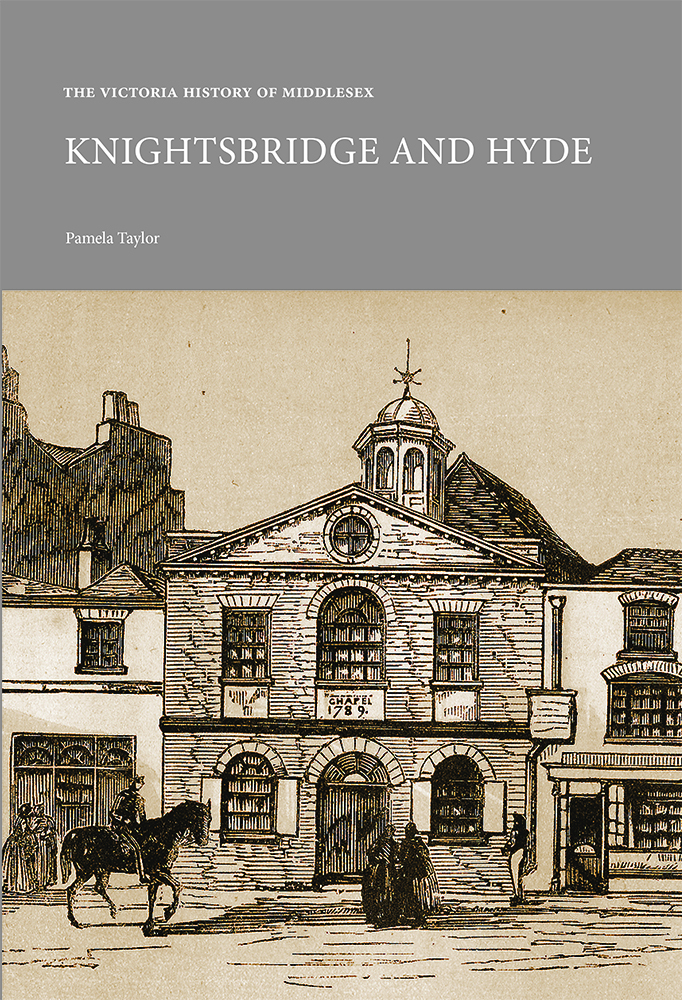
Today’s Knightsbridge, the wealthy shoppers’ paradise, is a recent cross-border development. This book breaks new ground by uncovering an earlier, larger Knightsbridge and showing why its initial extent and history have been largely forgotten. Knightsbridge was the southern part of the Westminster abbey manor of Knightsbridge and Westbourne, and until 1900 covered the same area as the parish of St Margaret Westminster Detached. Pre-1900 Knightsbridge/Westminster included today’s Kensington Palace, Kensington Gardens, almost half of ‘South Kensington’, and Hyde Park west of the Serpentine (or river Westbourne). So why was so much of Knightsbridge lost to memory, becoming thought of only in terms of Westminster, Hyde or (until 1900 entirely wrongly) Kensington?

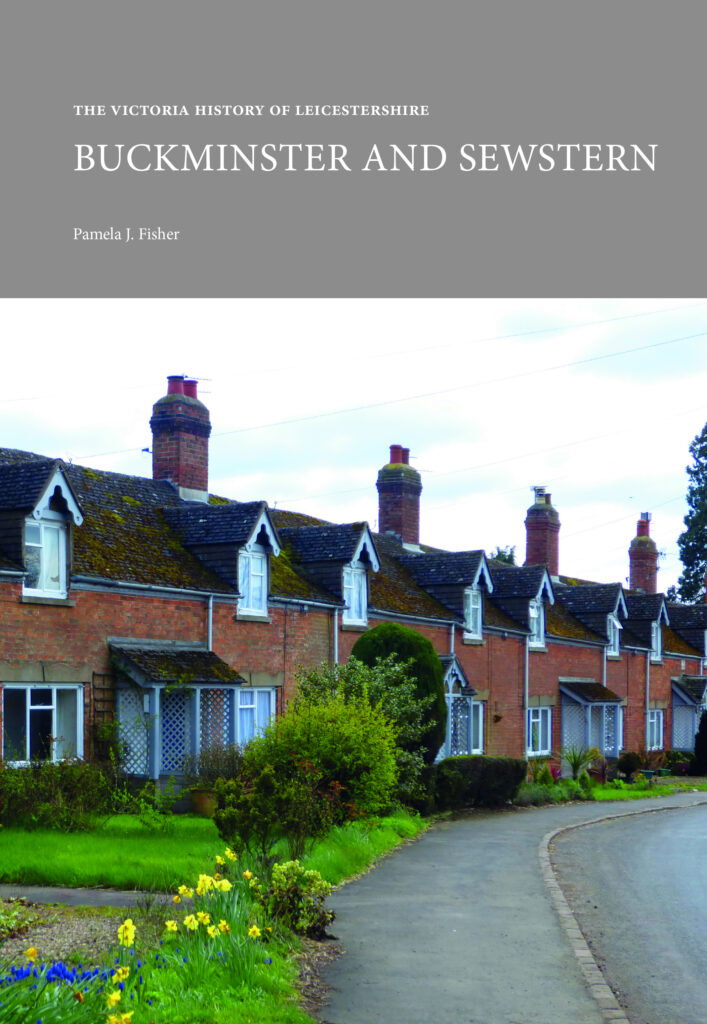
The Victoria History of Leicestershire: Buckminster and Sewstern

The Victoria History of Leicestershire: Buckminster and Sewstern

Buckminster and Sewstern, in north-east Leicestershire, are two small villages within a single parish, and although both were established before 1086, they have developed different characters.

Buckminster was purely an agricultural village until the 1790s, when Sir William Manners enlarged a small park, built a mansion and began to create an estate village. Many of the houses are of red brick, and were built for estate employees by the 9th earl of Dysart between 1878 and 1935, as part of a programme of village improvements. All the land, residential and commercial properties in Buckminster were held in 2017 by the Tollemache family, descendants of Sir William and Lord Dysart.

In contrast, Sewstern’s houses are individual in character, and mostly built from local limestone. Before the 20th century, many had large paddocks to the rear. The village is near the presumed ancient route known as Sewstern Lane, and a wide range of trades were followed between the 14th and 19th centuries, until the age of the railways ended the passing trade.

Land in both villages was quarried for ironstone in the 20th century, then reinstated for farmland, resulting in fields that are several feet below the level of the roads and property curtilages. This book explores the similarities and differences between the two villages over more than a thousand years of recorded history.

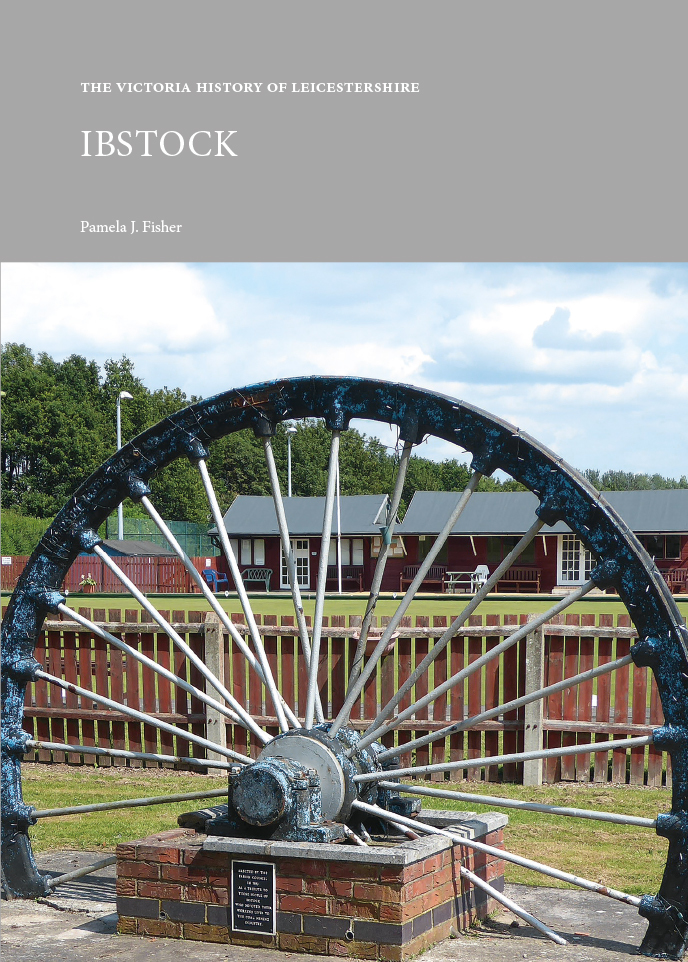
The Victoria History of Leicestershire: Ibstock

The Victoria History of Leicestershire: Ibstock

Ibstock is a large village 15 miles north-west of Leicester and the subject of the third VCH Short from Leicestershire. Neighbouring place-names indicate that the parish was once fringed by heathland to its north and west, while Ibstock’s own place-name references an early dairy farm on this land. Garendon Abbey, near Loughborough, received gifts in the 12th century totalling over 500 a. in Ibstock, and created a large sheep farm on their enclosed estate.

Framework-knitting had become important by 1811, when trade and manufacture employed almost as many families in the parish as agriculture. Ibstock’s character changed more dramatically in the later 19th century, when the coal deposits which lay beneath Ibstock’s soils began to be exploited. Two collieries were sunk within the parish by different owners, in 1825 and 1873, ushering in a period of rapid population growth. This was accompanied by the growth of Nonconformity, and the establishment of numerous sports teams, clubs and other societies, some encouraged by Ibstock’s Anglican, Baptist, Primitive Methodist, Wesleyan Methodist and Wesleyan Reform ministers, with others open to all.

The former colliery brickworks continued, and Ibstock Brick, based in the parish, was one of Britain’s largest brickmakers in the early 21st century. The mines have since closed, and much of the undermined farmland has been planted with young trees from the 1990s, to become part of the National Forest.

The Victoria History of Hampshire: Medieval Basingstoke

The Victoria History of Hampshire: Medieval Basingstoke

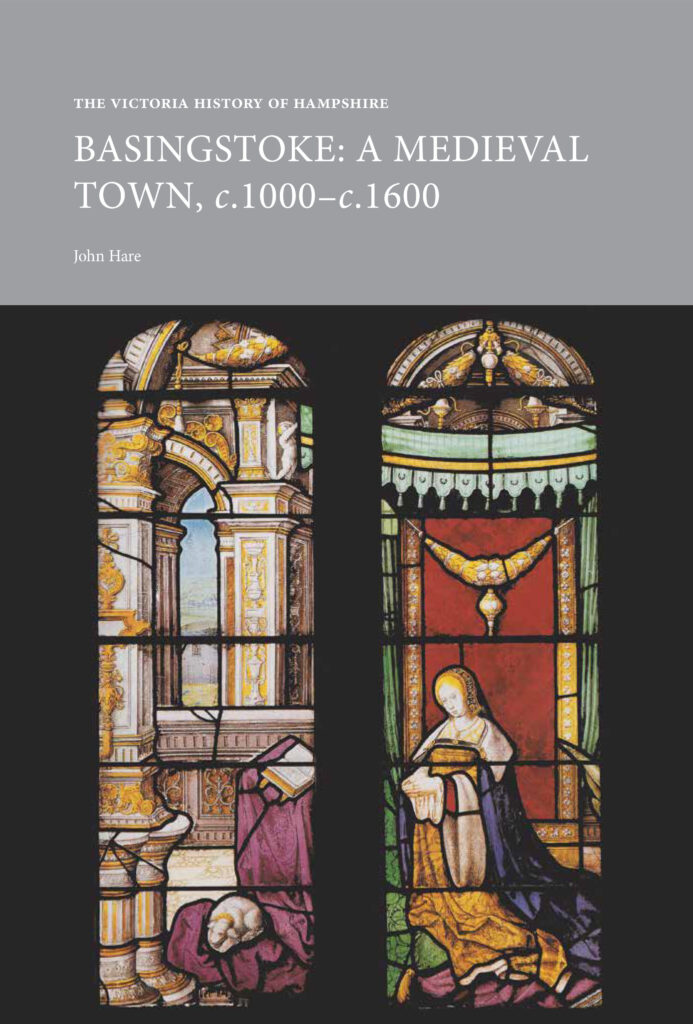
Basingstoke is frequently seen as a very modern town, the product of the last decades of the 20th century. In reality it has a long, rich and prosperous history. From its beginnings c.1000 it became a significant market centre for the area around, and a place on the route to London from the west. By 1500 it was among the top 60 towns in England by wealth and taxpayers, and the centre of a major industrial area, whose manufactured cloths formed part of international patterns of trade. Moreover, it is well documented particularly for the 15th and 16th century, when it was at its peak, and should provide a useful addition to the limited number of studies of small medieval towns.

Much of the old town has been swept away by the shopping centre, but something of the medieval footprint survives in its street beyond this, in a few surviving buildings and above all in its magnificent church. This book examines these features as well as the families, whether outsiders or locals, who made the most of the new thriving economic conditions, and whose dynamism helped create the town’s expansion.