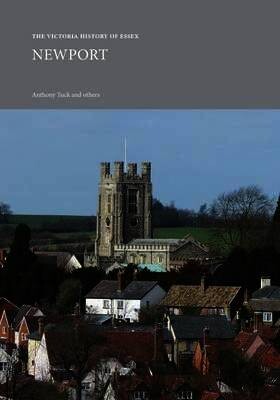
The Victoria History of Essex: Newport
Anthony Tuck (Editor)
Series: VCH Shorts
Published in association with: Institute of Historical Research
The parish of Newport lies in the valley of the river Cam in north-west Essex about three and a half miles south-west of the market town of Saffron Walden, and a short distance from the Hertfordshire and Cambridgeshire borders. It probably originated in the early 10th century as a royal foundation, and it soon developed some urban features such as a market. Its position on an important through route between London and East Anglia gave it a more varied character than some of its neighbouring villages, and the coming of the railway in the 19th century led to the establishment of a gas works and maltings. Even so, it remained a largely agricultural community until the mid 20th century, but thereafter its position as a thoroughfare village helped to establish Newport as a community with most of its adult population finding work elsewhere, some in London.
This book explores the varying character of Newport over eleven centuries. It examines the changing patterns of landownership, social structure and economy of the village and its institutions, not least its 16th-century grammar school. It also discusses the part played, especially in the 18th, 19th and 20th centuries, by the owners of Shortgrove Hall, within the parish, and Quendon Hall, a few miles to the south.
Foreword
Introduction
James Bettley, Bernard Nurse and Anthony Tuck
Landscape, Population and Settlement Landscape and Geology Parish Boundaries Population Prehistoric Settlement Roman Settlement Early Saxon Settlement Origins of Newport Settlement Pattern Transport and Communications Secular Buildings
Landownership
James Bettley, David Evans and Anthony Tuck
Shortgrove Estate and Manor Shortgrove Hall The Manor of Newport Pond Tilty Abbey Estate The Quendon Hall Estate in Newport Dispersal of the Shortgrove and Quendon Estates
Economic History
Ben Cowell and Anthony Tuck
Newport as a ‘borough’ Markets and Fairs Agriculture, c.1086–c.1600 Newport and Shortgrove from the 17th Century to the Present Day Employment 19th and 20th Century Industries
Social History
James Bettley, Bernard Nurse, Anthony Tuck and Gillian Williamson
Social Structure to c.1600
Social Structure from c.1600
Public Health
Social Welfare
Poor Relief Charities Leisure and Recreation Education
Local Government
James Bettley, Anthony Tuck and Gillian Williamson
Manorial Administration Vestry Government The Parish Council Administration of Justice from c.1600 Highways Fire Service Parliamentary Elections
Religious History
James Bettley, Bernard Nurse, Anthony Tuck and Gillian Williamson
Parochial Organisation The Parish Church of St Mary Parish Church Pre-Reformation Parish Church Post-Reformation St Leonard’s Hospital Post-Reformation Catholicism Protestant Dissent
Post-War Development
Anthony Tuck
List of Abbreviations
Notes on Sources
EPUB: 9781909646391
Paperback: 9781909646056 / 191 pages / 254mm x 178mm
Anthony Tuck (Editor)
Subject: History, Local History
BISAC codes: HIS015000
Thema codes: NHD
Keywords: Church of England, Country cottages, Landscape history, Pond Common Trust, Shortgrove estate, The Poor Law, Turnpike Trust
More books in this subject area



Living with Machines
Ruth Ahnert
Emma Griffin
Jon Lawrence
The Living with Machines Team
12 November 2026

Fasti Ecclesiae Anglicanae 1541–1857: The Welsh Dioceses XIV
William H. Campbell
Joyce M. Horn
13 August 2026

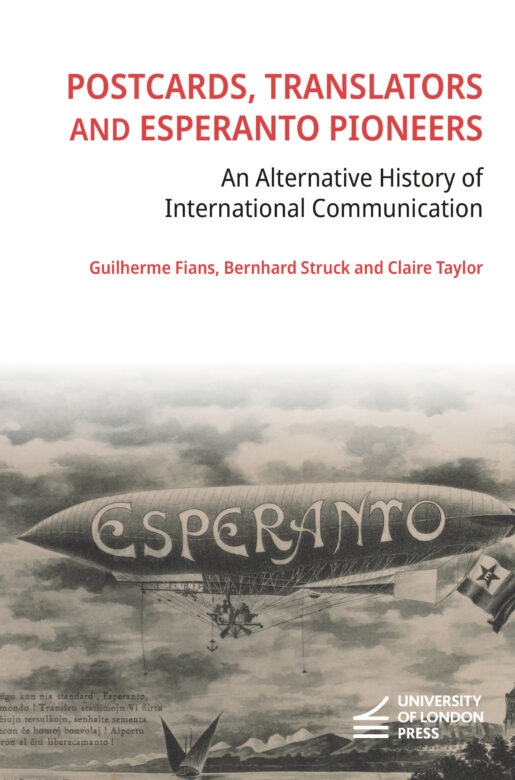
Postcards, Translators and Esperanto Pioneers
Guilherme Fians
Bernhard Struck
Claire Taylor
13 November 2025