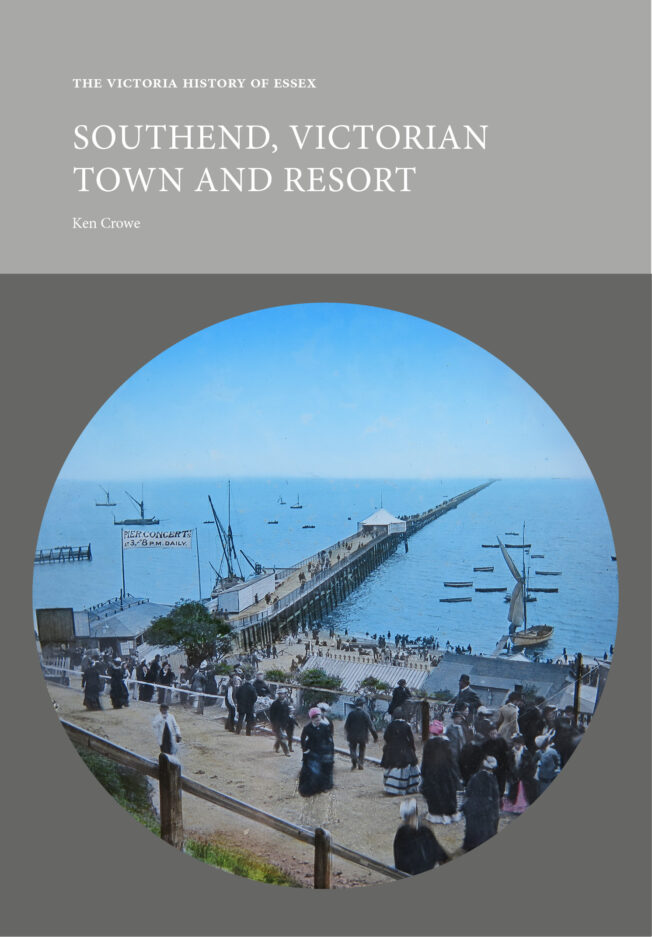
The Victoria History of Essex: Southend
Victorian Town and Resort
Ken Crowe (Author)
Series: VCH Shorts
Published in association with: Institute of Historical Research
The story of Southend’s growth as a town and resort in the Victorian and Edwardian periods is told here in this new history of Southend. As the nearest seaside resort to London, the town’s development has been determined in large part by the impact of its seasonal visitors. Yet it was the year-round movement of people from other parts of Essex, England and from the European continent in the late-nineteenth and early-twentieth-centuries that was to have a lasting effect on the character of the town.
Richly illustrated and drawing from original sources, this volume offers new perspectives on the developments that laid the foundations of Southend as we know it today. Its thematic chapters chart the physical expansion of housing in the period and the development of the resort’s infrastructure and economy, among other topics. Although concentrating on Southend and its resort, chapters on agricultural depression and land speculation, education, clubs and societies and unemployment expand the book’s regional focus to neighbouring areas, making this valuable reading for anyone interested in the history of Essex and the UK’s seaside towns.
This publication takes a fresh and comprehensive view of Southend, using primary sources to inform areas and themes that have thus far remained largely unexplored. … This publication will prove to be a useful resource for students, academic historians and indeed anyone interested in the history of the locality.
—Sean o’Dell, Retired Senior Lecturer in Contextual Studies and Social History at University Centre Colchester, UK
The Local Historian
-
Introduction
-
Southend’s Historic Parishes
-
Landownership
-
The Building of Cliff Town
-
The Victorian Resort
-
The Expansion of Southend, 1860–1914
-
Agricultural Depression and the Building of Leigh
-
Occupations and Occupational Structure
-
Retail Businesses and Seasonal Occupations
-
Accommodation and Catering
-
Brickmaking
-
Unemployment in Edwardian Southend
-
Education in Southend, 1802-1902
-
Clubs and Societies
EPUB: 9781915249883
Paperback: 9781915249876 / 164 pages / 254mm x 178mm
Ken Crowe (Author)
Ken Crowe taught history at a local Comprehensive school before joining the staff of Southend Museum, where he curated, among others, the Local History collections. He gained MAs in both Archaeology and Local and Regional History (London and Essex) and has written extensively on local history and archaeological subjects. Since retiring, in 2014, he has been closely involved with both the VCH Essex Trust and the Friends of Historic Essex.
This publication takes a fresh and comprehensive view of Southend, using primary sources to inform areas and themes that have thus far remained largely unexplored. … This publication will prove to be a useful resource for students, academic historians and indeed anyone interested in the history of the locality.
—Sean o’Dell, Retired Senior Lecturer in Contextual Studies and Social History at University Centre Colchester, UK
The Local Historian
Subject: History, Local History
BISAC codes: HIS015060, HIS052000, HIS054000
Thema codes: JBSD, NHTB, RGL, WQH
Keywords: Daniel Robert Scratton, Edwardian, Essex, Leigh, Southend, Victorian, occupations, population growth, resort, seaside, transport
EPUB accessibility:
Accessibility summary
Table of contents navigation
Index navigation
Short alternative textual descriptions
Print-equivalent page numbering
This publication generally has been produced to meet WCAG Level AA, but it has not been checked for language shifts or for colour contrast within images. Please let us know if you find anything inaccessible within our book as we continue improving our processes. You can contact us at uolp.accessibility@london.ac.uk.
More books in this subject area

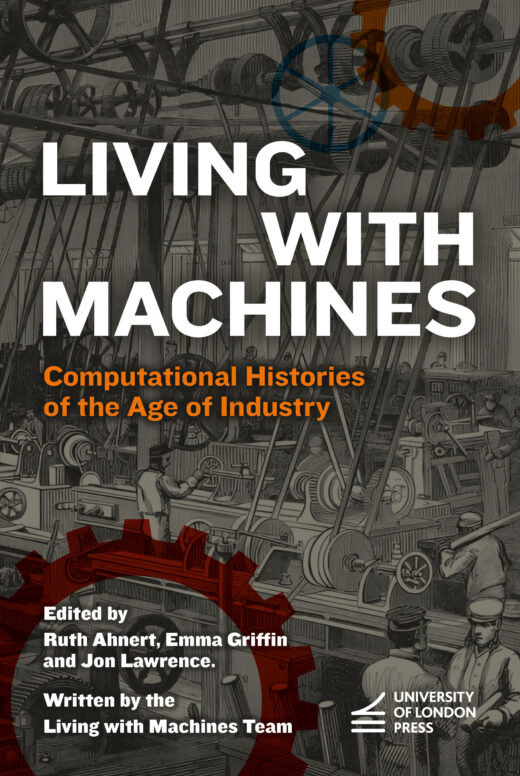
Living with Machines
Ruth Ahnert
Emma Griffin
Jon Lawrence
The Living with Machines Team
12 November 2026

Fasti Ecclesiae Anglicanae 1541–1857: The Welsh Dioceses XIV
William H. Campbell
Joyce M. Horn
13 August 2026
Postcards, Translators and Esperanto Pioneers
Guilherme Fians
Bernhard Struck
Claire Taylor
13 November 2025
Atlantic Isles: Travel and Identity in the British and Irish West, 1880–1940
Gareth Roddy
30 October 2025