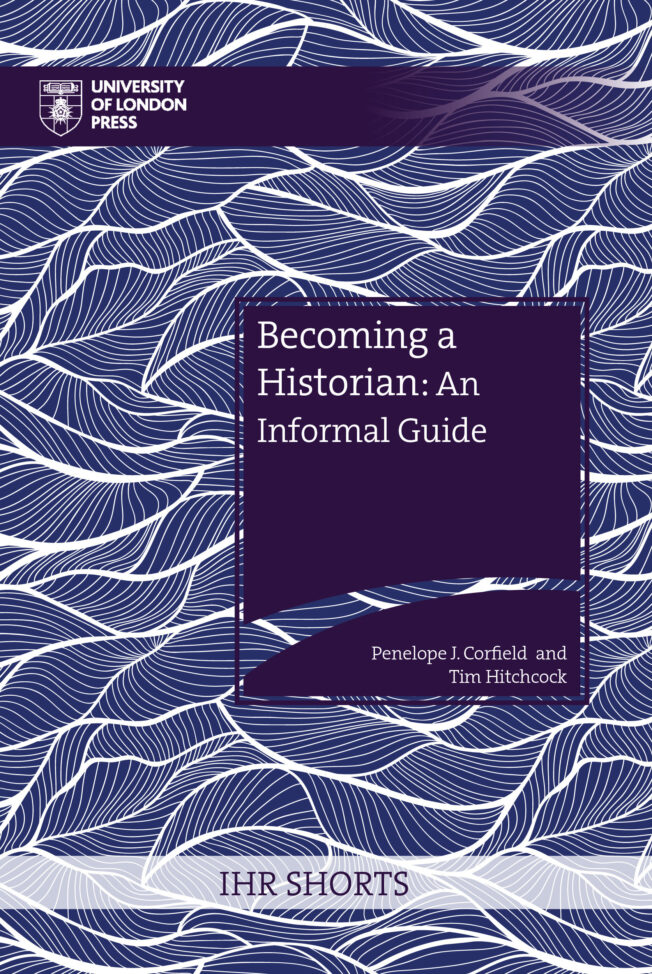

Becoming a Historian
An Informal Guide
Penelope J. Corfield (Author), Tim Hitchcock (Author)

Series: IHR Shorts
Published in association with: Institute of Historical Research
Writing history is an art and a craft. This handbook supports research students and independent scholars by showing how the historical profession works and how to participate in its vibrant community of scholars. It outlines techniques to help design large-scale research projects, demonstrates the difference between quantitative and qualitative research methodologies and provides advice on bringing projects to a positive conclusion. This friendly guide is frank about the pains and pleasures of sticking with a long-term project, and explains how to present original research to wider audiences, including the appropriate use of social media, the art of public lecturing and strategies for publication.
Written by esteemed historians Penelope J. Corfield and Tim Hitchcock, Becoming a Historian debunks the myths and demystifies the systems that can make the world of research feel intimidating, and offers step-by-step advice on participating in the historical community.
Winner of the Choice Outstanding Academic Titles, 2024 Award!
The rich tone lucid thinking and crisp writing flow through three core sections to form a road map of insightful advice for the doctoral history students journey in writing a dissertation. Part 1… explains historical method for topic ideations to research plan to source assessment. Part 2… shows how historians gaze into the past, interpreting primary evidence and prior histories to build a long-term history. Part 3… tells how historians scholarly conversations via seminars and other venues provide feedback to refine the doctoral thesis pursuant to the oral dissertation defence BA and MA students Becoming a Historian stands tall as the go to history methods primer for anglosphere PhD students.’
— J.T. Mallone, Queens College, City University of New York, USA
Part 1 Starting, Assessing, Organising 1.1 Joining the Through-Time Community of Historians
1.2 Launching the Research Project 1.3 Shared Monitoring of the Timetable 1.4 Finding Well-Attested Evidence 1.5 Probing Sources & Methodologies 1.6 Managing Masses of Data
Part 2 Writing, Analysing, Interpreting 2.1 Writing as a Historian
2.2 Doing It in Public: Historians & Social Media 2.3 Unblocking Writer’s Block, or Better Still, Non-Blocking in the First Place 2.4 Using Technology Creatively: Digital History 2.5 Assessing Some Key Research Approaches 2.6 Troubleshooting
Part 3 Presenting, Completing & Moving Onwards
3.1 Public Lecturing
3.2 Asking & Answering Seminar Questions 3.3 Chairing Seminars 3.4 Taking the Last Steps to Completion 3.5 Experiencing the Viva including Appendix: Note on Range of Viva Outcomes & Appropriate Responses 3.6 Moving Onwards to Publication & Civic Engagement
Part 4 Taking the Long View – Career Outcomes
4.1 Academic Trackways 4.2 Parallel Trackways 4.3 Summary: Trained Historians’ Knowledge and Skills
Part 5 Reflecting 5.1.1 & 5.1.2 Retrospective Thoughts
Select Booklist
PDF: 9781914477164
EPUB: 9781914477171
Read Online: 9781913002107
Paperback: 9781914477157 / 216 pages / 156mm x 234mm
Penelope J. Corfield (Author)
Penelope J. Corfield is Professor Emeritus of History at Royal Holloway, University of London; Visiting Fellow at the University of Newcastle upon Tyne; Member of the Academia Europaea/ Academy of Europe; and President of the International Society for Eighteenth-Century Studies (2019- the present). Her publications address British social, cultural and urban history in the eighteenth and nineteenth centuries, as well as general theories of time and history. She gained her own research experience at the Universities of Oxford and London (LSE); she has enjoyed supervising many MA and PhD students; and she welcomes the internationalization of scholarship.
Tim Hitchcock (Author) 
Tim Hitchcock is Professor of Digital History at the University of Sussex and until 2021 was Director of the Sussex Humanities Lab. Prior to this he held posts at the University of North London, and the University of Hertfordshire. He has published a dozen books on the histories of poverty, sexuality, gender and crime focusing on eighteenth-century London. With Robert Shoemaker, and others, he has also been responsible for creating a series of web resources, including the Old Bailey Online, London Lives and Locating London’s Past. His first degree was awarded by the University of California at Berkeley, and he received his doctorate from the University of Oxford.
The rich tone lucid thinking and crisp writing flow through three core sections to form a road map of insightful advice for the doctoral history students journey in writing a dissertation. Part 1… explains historical method for topic ideations to research plan to source assessment. Part 2… shows how historians gaze into the past, interpreting primary evidence and prior histories to build a long-term history. Part 3… tells how historians scholarly conversations via seminars and other venues provide feedback to refine the doctoral thesis pursuant to the oral dissertation defence BA and MA students Becoming a Historian stands tall as the go to history methods primer for anglosphere PhD students.’
— J.T. Mallone, Queens College, City University of New York, USA
Subject: History
BISAC codes: HIS000000
Thema codes: GTB, NHA
Keywords: advice, historians, methods, research projects, scholarly community
EPUB accessibility:
Accessibility summary
EPUB Accessibility Specification 1.1
Table of contents navigation
Index navigation
Single logical reading order
Short alternative textual descriptions
Print-equivalent page numbering
Use of color is not sole means of conveying information
Next / Previous structural navigation
ARIA roles provided
Appearance of all textual content can be modified
All non-decorative content supports reading without sight
WCAG v2.2
WCAG level AA
Compliance certification by (name)
More books in this subject area

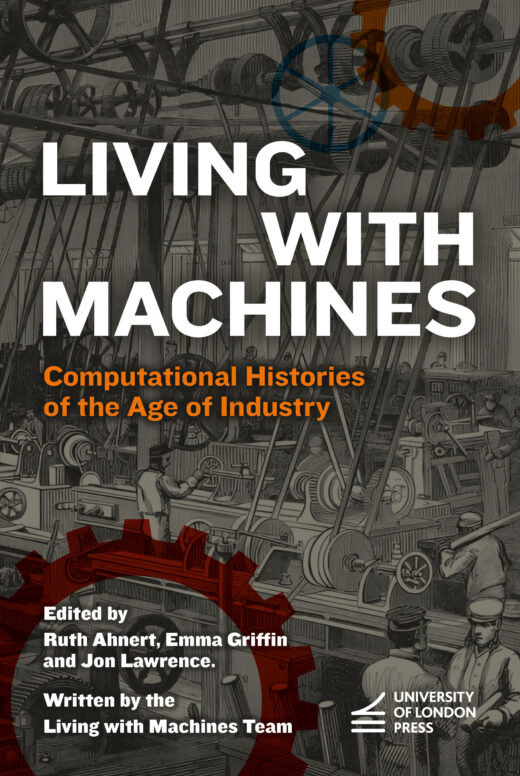
Living with Machines
Ruth Ahnert
Emma Griffin
Jon Lawrence
The Living with Machines Team
12 November 2026

Fasti Ecclesiae Anglicanae 1541–1857: The Welsh Dioceses XIV
William H. Campbell
Joyce M. Horn
13 August 2026
Postcards, Translators and Esperanto Pioneers
Guilherme Fians
Bernhard Struck
Claire Taylor
13 November 2025
Atlantic Isles: Travel and Identity in the British and Irish West, 1880–1940
Gareth Roddy
30 October 2025