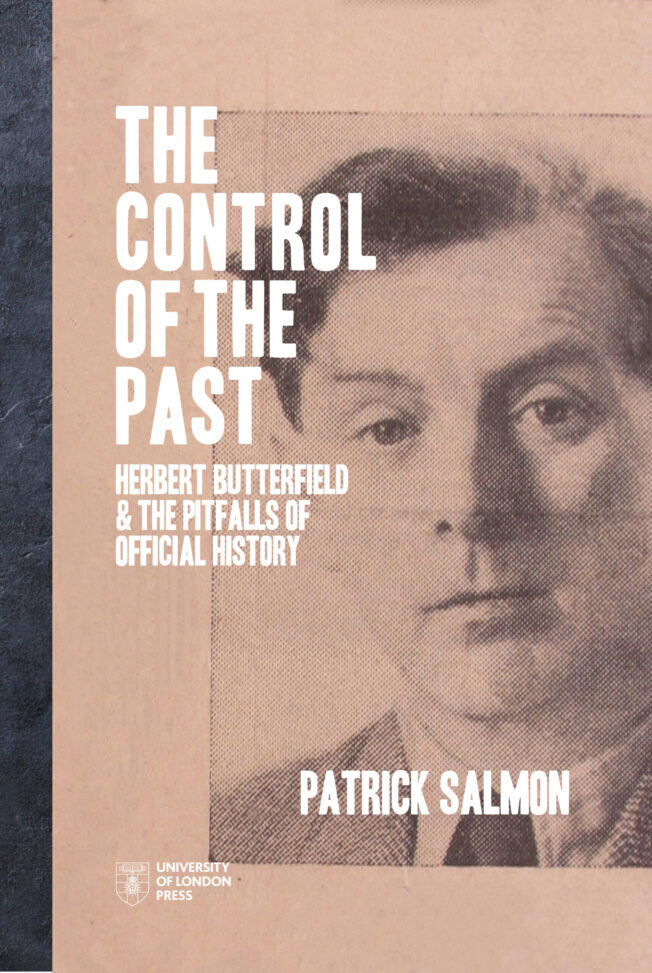

The Control of the Past
Herbert Butterfield and the Pitfalls of Official History
Patrick Salmon (Author)

Series: IHR Shorts
Published in association with: Institute of Historical Research
Herbert Butterfield (1900–1979) was one of the earliest and strongest critics of what he saw as the British government’s attempts to control the past through the writing of so-called, ‘official histories’. His famous diatribe against the ‘pitfalls’ of government-mandated history first appeared in 1949, at a time when the British government was engaged in publishing official histories and diplomatic documents on an unprecedented scale following the Second World War. But why was Butterfield so hostile to official history, and why do his views still matter today?
Written by one of the few historians employed by the British government, this important book details how successive governments have applied a selective approach to the past in order to tell or re-tell Britain’s national history, with implications for the future.
Providing a unique overview of the main trends of official history in Britain since the Second World War, the book details how Butterfield came to suspect that the British government was trying to suppress vital documents revealing the Duke of Windsor’s dealings with Nazi Germany. This seemed to confirm his long-held belief that all governments would seek to manipulate history if they could, and conceal the truth if they could not. At the beginning of the 21st century, official history is still being written and the book concludes with an insider’s perspective on the many issues it faces today– on freedom of information, social media and reengaging with our nation’s colonial legacy. Governments have recently been given many reminders that history matters, and it is Herbert Butterfield above all who reminds us that we must remain vigilant in monitoring how they respond to the challenge.
Prologue
1. ‘One of his most violent essays’
2. Butterfield and official history
3. Official history then and now
4. Why bother with Butterfield?
Appendices
PDF: 9781914477218
EPUB: 9781914477225
Read Online: 9781913002114
Paperback: 9781914477195 / 118 pages / 156mm x 234mm
Patrick Salmon (Author)
Patrick Salmon is Chief Historian at the Foreign, Commonwealth and Development Office. He was formerly Professor of International History at the University of Newcastle upon Tyne. He is a Fellow of the Royal Historical Society and a Foreign Member of the Norwegian Academy of Science and Letters. His publications include Scandinavia and the Great Powers 1890-1940 (1997), Deadlock and Diversion: Scandinavia in British Strategy during the Twilight War 1939-1940 (2012) and several volumes in the series Documents on British Policy Overseas (DBPO), including German Unification, 1989-1990 (2009), The Challenge of Apartheid: UK-South African Relations, 1985-1986 (2017) and The Unwinding of Apartheid: UK-South African Relations, 1986-1990 (2019).
Subject: History, Political History
BISAC codes: HIS015070, HIS016000, POL010000
Thema codes: JBCC9, NHAH
Keywords: Bletchley Park, Britain, Duke of Windsor, GLAM, Germany, Herbert Butterfield, Hitler, India, Ireland, National Trust, Nazi, World War 2, archive, collective memory, colonial history, education, forgotten history, jingosim, museum, national histories, slavery, suppressed history, war crimes
EPUB accessibility:
Accessibility summary
EPUB Accessibility Specification 1.1
Table of contents navigation
Index navigation
Single logical reading order
Short alternative textual descriptions
Print-equivalent page numbering
Use of color is not sole means of conveying information
Next / Previous structural navigation
ARIA roles provided
Appearance of all textual content can be modified
All non-decorative content supports reading without sight
WCAG v2.2
WCAG level AA
Compliance certification by (name)
More books in this subject area

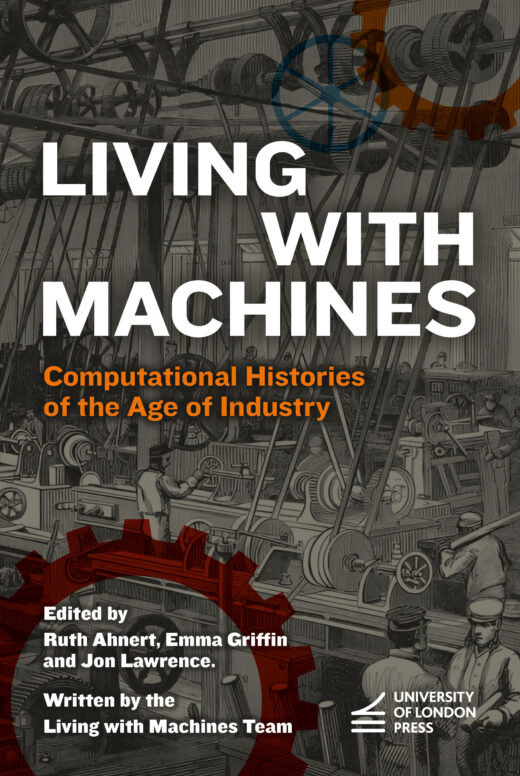
Living with Machines
Ruth Ahnert
Emma Griffin
Jon Lawrence
The Living with Machines Team
12 November 2026

Fasti Ecclesiae Anglicanae 1541–1857: The Welsh Dioceses XIV
William H. Campbell
Joyce M. Horn
13 August 2026
Postcards, Translators and Esperanto Pioneers
Guilherme Fians
Bernhard Struck
Claire Taylor
13 November 2025
Atlantic Isles: Travel and Identity in the British and Irish West, 1880–1940
Gareth Roddy
30 October 2025