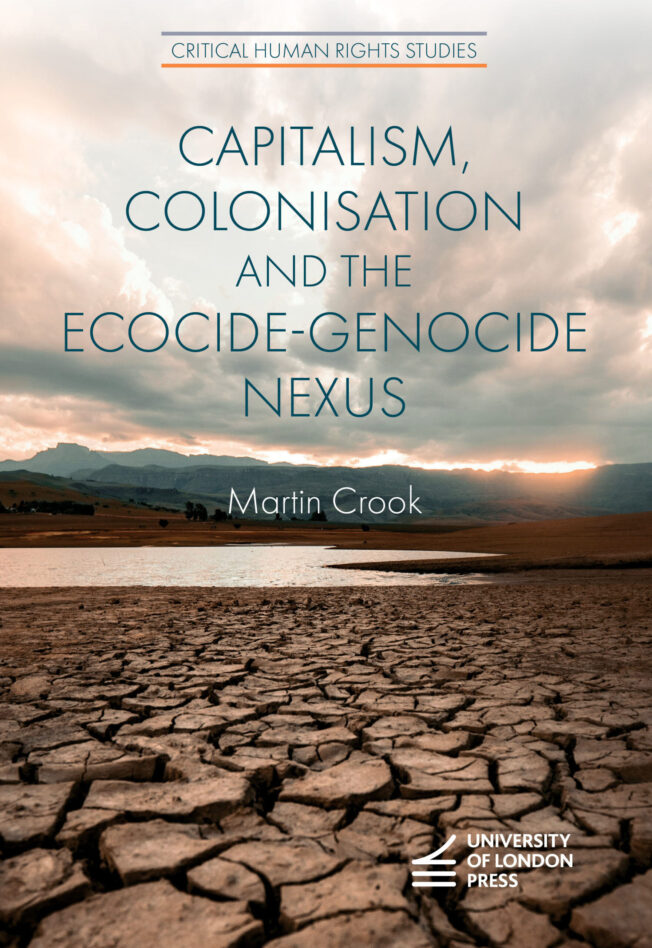

Capitalism, Colonisation and the Ecocide-Genocide Nexus
Martin Crook (Author)

Series: Critical Human Rights Studies
Published in association with: Human Rights Consortium, Institute of Commonwealth Studies
With climate change and a looming ecological crisis impacting the systems and institutions that support life, this timely publication examines the drivers of ecologically induced genocide – the environmental destruction resulting in conditions of life that fundamentally threaten a social group’s cultural or physical existence. Focusing on the former British colonies of Kenya and Australia, both united by a discourse of developmentalism, the book draws attention to the critical role that the destructions of ecologies has historically played, and continues to play, in the genocide of Indigenous and place-based peoples. It synthesises radical political ecology with a political-economic approach to illuminate the nexus between the inherently genocidal and ecocidal properties of the capitalist global system and the manner in which the ecocidal logic of capital intersects with settler and post-colonial structures. In exploring the genocidal effects of climate governance and market environmentalism on Indigenous peoples in Kenya and forms of energy extraction on Indigenous groups in Australia, the book also draws on original interviews to prioritise the lived experiences of, and give voice to, the groups that have suffered structural violence and social harms. Fundamentally, it puts forward a political economy of genocide, which seeks to explain the manner in which material forces, on local and global scales, underpin and give rise to ever-evolving relations of genocide. As such, this important book deepens and enriches our knowledge of genocide and the eco-genocidal nature of colonisation, and the capitalist mode of production that underpins developmentalism.
The planet is threatened in so many ways. Humanity pursues wars that raze communities and ruin habitats, while plundering and spoiling the landscapes and oceans of the world. This powerful book makes a major contribution to studies of the global injustices that have destroyed the ways of life of Indigenous peoples, eroded the sustainability of nature, and exposed the hubris of short-sighted governments and corporations. —Nigel South, Emeritus Professor, University of Essex, UK
1 Introduction: Ecological inequity, ‘exterminism’ and genocide
2 Australia: The Architecture of Dispossession Then
3 Australia: The Architecture of Dispossession Now
4 Kenya: The Architecture of Dispossession Then
5 Kenya: The Architecture of Dispossession Now
6 Conclusion: A Neo-Lemkinian Ontology in the Age of the Anthropocene
PDF: 9781912250608
EPUB: 9781912250615
Read Online: 9781912250677
Hardback: 9781912250585 / 272 pages / mm x mm
Paperback: 9781912250592 / 272 pages / mm x mm
Martin Crook (Author) 
Martin Crook is a Senior Lecturer in Sociology at the University of West England. His work examines the nexus between genocide and ecological destruction and has become an essential underpinning for the development of a burgeoning new field in the study of genocide, namely the sociology and political economy of genocide and ecocide, in particular developing an original approach to examining the role of extractivism and climate change mitigation in the ecocide genocide nexus.
The planet is threatened in so many ways. Humanity pursues wars that raze communities and ruin habitats, while plundering and spoiling the landscapes and oceans of the world. This powerful book makes a major contribution to studies of the global injustices that have destroyed the ways of life of Indigenous peoples, eroded the sustainability of nature, and exposed the hubris of short-sighted governments and corporations. —Nigel South, Emeritus Professor, University of Essex, UK
Subject: Human Rights
BISAC codes: POL023000, POL035010, POL045000, POL061000
Thema codes: JPVH, KCP, KCSA, NHTZ, RN
Keywords: Australia, Kenya, capitalism, colonialism, developmentalism, dispossession, eco-genocidal, exterminism, human rights, indigenous people, political economy, production, settler colonies
EPUB accessibility:
Accessibility summary
Table of contents navigation
Index navigation
Single logical reading order
Print-equivalent page numbering
ARIA roles provided
This publication generally has been produced to meet WCAG Level AA, but it has not been checked for language shifts. Please let us know if you find anything inaccessible within our book as we continue improving our processes. You can contact us at uolp.accessibility@london.ac.uk.
More books in this subject area
Envisioning Global LGBT Human Rights
Nancy Nicol
Adrian Jjuuko
Richard Lusimbo
Nick Mulé
Susan Ursel
Amar Wahab
Phyllis Waugh
13 September 2018

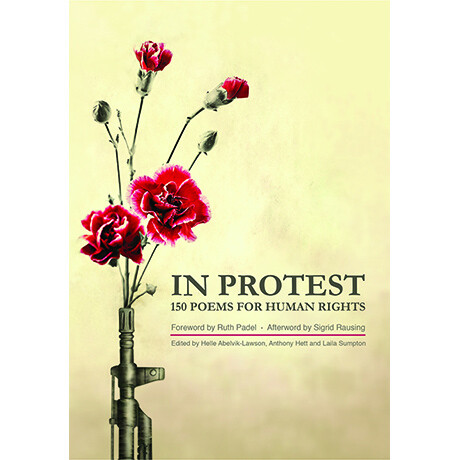
In Protest: 150 Poems for Human Rights
Helle Abelvik-Lawson
Anthony Hett
Laila Sumpton
1 October 2013