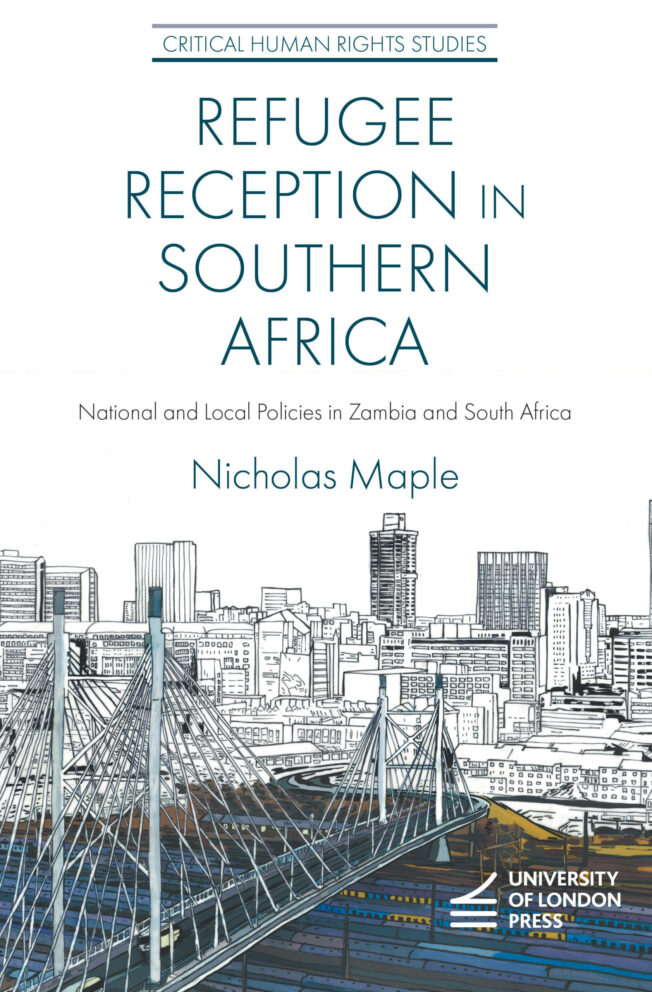

Refugee Reception in Southern Africa
National and Local Policies in Zambia and South Africa
Nicholas Maple (Author)

Series: Critical Human Rights Studies
Published in association with: Human Rights Consortium, Institute of Commonwealth Studies
A new understanding of state-based refugee reception that reflects the complex dynamics of contemporary refugee arrival.
It is no longer realistic (if it ever was) to understand persons who flee across a border as a homogeneous group whose movement abruptly ends once they arrive in a host state or refugee camp. Through a comparative analysis of the politics surrounding the welcome afforded to refugees, this book offers an original perspective on refugee hosting in Southern Africa. Using the cases of Zambia and South Africa, the book explores why some countries maintain encampment reception policies for refugees, and others use more liberal ‘free settlement’ approaches, whereby refugees are granted freedom of movement and permitted to settle in cities and towns. While state-based reception is frequently framed as one-off moments, such as registration, Refugee Reception in Southern Africa examines reception as a complex and ongoing process of negotiations between refugees and state, with reception policies vital in shaping a refugee’s ability to settle and engage with local communities and labour markets.
With its new ‘refugee reception’ framework and in-depth case studies full of concrete examples, this book is a significant theoretical and methodological contribution to migration studies more broadly.
This is a timely and important book that makes a critical contribution to the literature on the politics of asylum in Africa. The book’s discussion of methodology and positionality are especially compelling and will serve as a template for a new generation of scholarship.
—James Milner, Associate Professor of Political Science, Carleton University, Canada
Refugee Reception in Southern Africa by Nicholas Maple challenges us to rethink the concept, politics and practice of refugee reception and its impacts. Far more than just a legal and technical process, through two meticulously researched and contrasting case studies – Zambia and South Africa – Maple shows how reception is a highly politicised and long-term determinant of the lives, livelihoods, protection, and the rights of refugees.
— Roger Zetter, Professor Emeritus, University of Oxford, UK
Nicholas Maple’s well-formulated and detailed new book on Zambia and South Africa… will be of interest to academics and students of (forced) migration studies, political science, international relations, urban studies, and political geography. The book’s conceptual approach could also be of interest to scholars exploring similar descriptive or explanatory frameworks for their research. It would be of particular interest to practitioners and policymakers, especially in the Global South, due to its comparative approach and strong emphasis on explaining the decision-making of state actors at various levels.
—Rohini Mitra, Centre for Development Research, University of Bonn, Germany
Journal of Refugee Studies
This book was a good idea, for two reasons. Firstly, two countries that are almost neighbours have very different approaches towards asylum seekers, offering an opportunity for comparative analysis. Secondly, refugee reception is not studied nearly widely and systematically enough in Africa in general, including in Southern Africa. …Maple draws out common lessons from the two cases and makes some useful policy recommendations. … this is a valuable addition to the literature and the substantive chapters are certainly worth reading to gain a sense of different refugee regimes in neighbouring Southern African states.
—Alan Hirsch New South Institute, University of Cape Town, South Africa, and SOAS, University of London, UK
South African Journal Of International Affairs
- Introduction
- 1 Framing refugee reception
- 2 Refugee reception policies in Africa
- 3 Investigating state behaviour towards refugees
- 4 Encampment: the maintenance of a camp-based reception in Zambia
- 5 Encampment: post-registration in Zambia
- 6 Free-settlement: the maintenance of a free-settlement reception in South Africa
- 7 The urban space: post-registration in South Africa
- 8 Conclusions and ways forward
PDF: 9781908590763
EPUB: 9781908590770
Read Online: 9781912250622
Hardback: 9781908590749 / 282 pages / 240mm x 160mm
Paperback: 9781908590756 / 282 pages / 234mm x 156mm
Nicholas Maple (Author)
Nicholas Maple is a Lecturer in Refugee Studies at the Refugee Law Initiative, School of Advanced Study. Prior to taking on this position, he undertook a Post-Doctoral Research Fellow position at the African Centre for Migration & Society (ACMS), University of the Witwatersrand. He is also the Co-Editor in Chief at the Refugee Survey Quarterly journal (Oxford University Press).
This is a timely and important book that makes a critical contribution to the literature on the politics of asylum in Africa. The book’s discussion of methodology and positionality are especially compelling and will serve as a template for a new generation of scholarship.
—James Milner, Associate Professor of Political Science, Carleton University, Canada
Refugee Reception in Southern Africa by Nicholas Maple challenges us to rethink the concept, politics and practice of refugee reception and its impacts. Far more than just a legal and technical process, through two meticulously researched and contrasting case studies – Zambia and South Africa – Maple shows how reception is a highly politicised and long-term determinant of the lives, livelihoods, protection, and the rights of refugees.
— Roger Zetter, Professor Emeritus, University of Oxford, UK
Nicholas Maple’s well-formulated and detailed new book on Zambia and South Africa… will be of interest to academics and students of (forced) migration studies, political science, international relations, urban studies, and political geography. The book’s conceptual approach could also be of interest to scholars exploring similar descriptive or explanatory frameworks for their research. It would be of particular interest to practitioners and policymakers, especially in the Global South, due to its comparative approach and strong emphasis on explaining the decision-making of state actors at various levels.
—Rohini Mitra, Centre for Development Research, University of Bonn, Germany
Journal of Refugee Studies
This book was a good idea, for two reasons. Firstly, two countries that are almost neighbours have very different approaches towards asylum seekers, offering an opportunity for comparative analysis. Secondly, refugee reception is not studied nearly widely and systematically enough in Africa in general, including in Southern Africa. …Maple draws out common lessons from the two cases and makes some useful policy recommendations. … this is a valuable addition to the literature and the substantive chapters are certainly worth reading to gain a sense of different refugee regimes in neighbouring Southern African states.
—Alan Hirsch New South Institute, University of Cape Town, South Africa, and SOAS, University of London, UK
South African Journal Of International Affairs
Subject: Human Rights
BISAC codes: POL035010, SOC007000
Thema codes: JBFG, JBFH, JPVH
Keywords: Africa, encampment, freedom of movement, host state, liberal, mobility, protection, refugee camps, settlement, urban displacement
EPUB accessibility:
Accessibility summary
EPUB Accessibility Specification 1.1
Table of contents navigation
Index navigation
Single logical reading order
Short alternative textual descriptions
Print-equivalent page numbering
Next / Previous structural navigation
ARIA roles provided
Appearance of all textual content can be modified
WCAG v2.2
WCAG level AA
Compliance certification by (name)
More books in this subject area
Envisioning Global LGBT Human Rights
Nancy Nicol
Adrian Jjuuko
Richard Lusimbo
Nick Mulé
Susan Ursel
Amar Wahab
Phyllis Waugh
13 September 2018

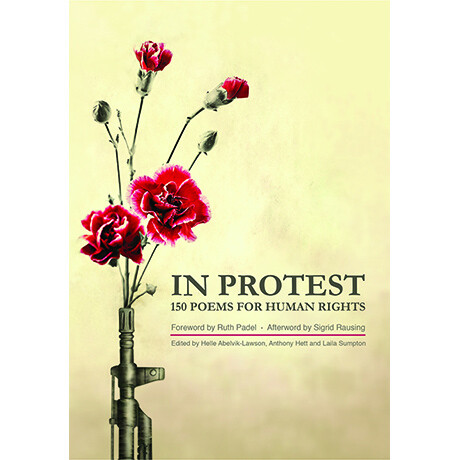
In Protest: 150 Poems for Human Rights
Helle Abelvik-Lawson
Anthony Hett
Laila Sumpton
1 October 2013