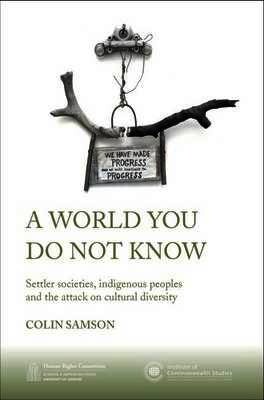

A World You Do Not Know
Settler Societies, Indigenous Peoples and the Attack on Cultural Diversity
Colin Samson (Author)

Series: Critical Human Rights Studies
Published in association with: Institute of Commonwealth Studies
A World You Do Not Know explores the wilful ignorance demonstrated by North America’s settlers in establishing their societies on lands already occupied by indigenous nations. Using the Innu of Labrador-Quebec as one powerful contemporary example, Colin Samson shows how the processes of displacement and assimilation today resemble those of the 19th century as the state and corporations scramble for Innu lands. While nation building, capitalism and industrialisation are shown to have undermined indigenous peoples’ wellbeing, the values that guide societies like the Innu are very much alive. The book ends by showcasing how ideas and land-based activities of indigenous groups in Canada and the US are being maintained and recast as ways to address the attack on cultural diversity and move forward to more positive futures.
This is a thoughtful book, highlighting the arrogance with which we approach indigenous ways of knowing and being, while also highlighting the continued resistance of indigenous peoples to western colonisation.
-David MacDonald, Professor of Political Science, University of Guelph
A World You Do Not Know explores the wilful ignorance demonstrated by NorthAmerica’s settlers in establishing their societies on lands already occupied by indigenous nations. Using the Innu of Labrador-Quebec as one powerful contemporary example, Colin Samson shows how the processes of displacement and assimilation today resemble those of the 19th century as the state and corporations scramble for Innu lands. While nation building, capitalism and industrialisation are shown to have undermined indigenous peoples’ wellbeing, the values that guide societies like the Innu are very much alive. The book ends by showcasing how ideas and land-based activities of indigenous groups in Canada and the US are being maintained and recast as ways to address the attack on cultural diversity and move forward to more positive futures.
This is a powerful, articulate and troubling book about many kinds of poison. It is a journey to the devastation that colonial history has brought to indigenous peoples around the world, from land seizure to transformation of diet, from losses of resources to the loss of self … a book of immense importance.
-Hugh Brody, author of Maps and Dreams, Canada Research Professor, University of the Fraser Valley
Preface: ‘Things to teach you of a world you do not know’ 1. All is not lost 2. The march of civilisation 3. Egalitarianism to capitalism 4. Nature and nation-building 5. Caribou to Chubby Chicken 6. Western diseases 7. Land-based revitalisation Bibliography
PDF: 9781912250394
EPUB: 9781912250653
Paperback: 9780957521001 / 282 pages / 229mm x 152mm
Colin Samson (Author)
This is a powerful, articulate and troubling book about many kinds of poison. It is a journey to the devastation that colonial history has brought to indigenous peoples around the world, from land seizure to transformation of diet, from losses of resources to the loss of self … a book of immense importance.
-Hugh Brody, author of Maps and Dreams, Canada Research Professor, University of the Fraser Valley
Subject: Commonwealth Studies, Human Rights
BISAC codes: POL038000, SOC062000
Thema codes: JBCC, JBSL11, JHM
Keywords: Canada, Innu, Quebec, US, colonial history, colonisation, indigenous
EPUB accessibility:
Accessibility summary
EPUB Accessibility Specification 1.1
Table of contents navigation
Single logical reading order
Short alternative textual descriptions
Full alternative textual descriptions
Print-equivalent page numbering
Use of color is not sole means of conveying information
Next / Previous structural navigation
ARIA roles provided
Appearance of all textual content can be modified
All non-decorative content supports reading without sight
WCAG v2.2
WCAG level AA
Compliance certification by (name)
More books in this subject area
Envisioning Global LGBT Human Rights
Nancy Nicol
Adrian Jjuuko
Richard Lusimbo
Nick Mulé
Susan Ursel
Amar Wahab
Phyllis Waugh
13 September 2018

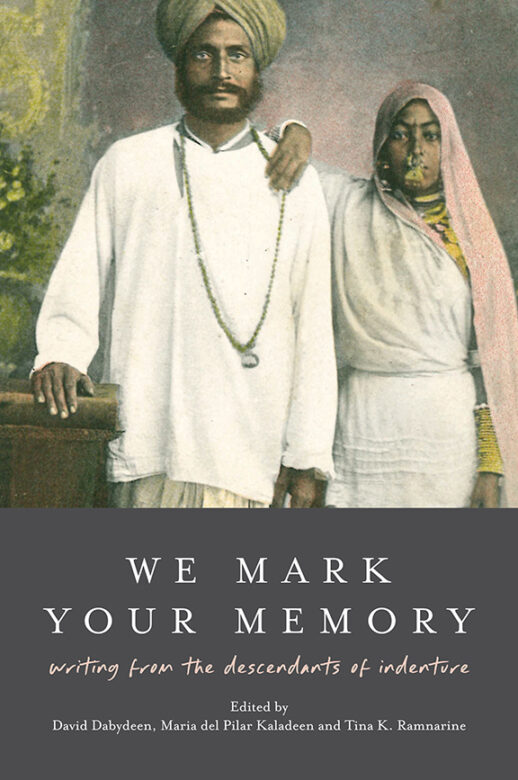
We Mark Your Memory: writings from the descendants of indenture
David Dabydeen
Maria del Pilar Kaladeen
Tina K. Ramnarine
30 April 2018