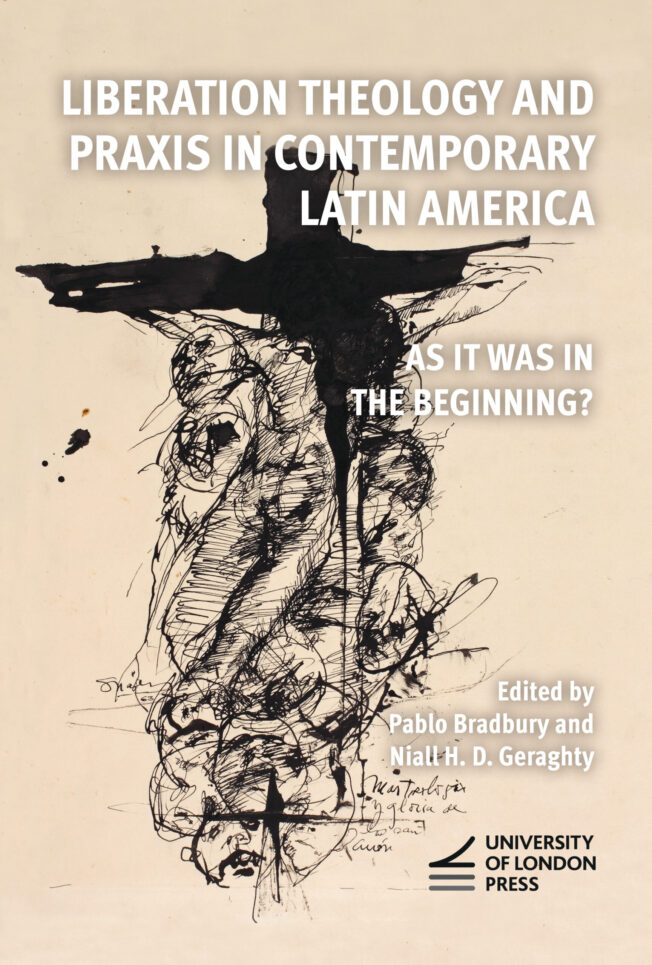

Liberation Theology and Praxis in Contemporary Latin America
As it Was in the Beginning?
Pablo Bradbury (Editor), Niall H.D. Geraghty (Editor)

Published in association with: Centre for Latin American and Caribbean Studies
This interdisciplinary volume brings together approaches from history, theology, cultural studies, architecture, sociology, and anthropology to reevaluate the legacy and significance of liberation theology in Latin America.
Liberation theology was born in the 1960s at a time of Church renewal and socio-economic ferment, as many sought radical solutions to the perceived exhaustion of developmentalist projects and the institutionalised violence of capitalism and dependency. By focussing on praxis – the lived experiences, spiritual, and embodied practices of those engaged in social action – the book challenges the assumption that liberation theology had reached its twilight by the late 1970s. Indeed, it demonstrates that liberationist Christianity was more diverse and internally conflicted, more widely resonant outside ecclesial confines, and more interconnected over time, than often allowed.
The chapters provide new perspectives on liberationist engagements with, and influence on, ecclesiology, Participatory Action Research, architecture and urbanism, feminism, human rights, ecofeminist political theology, and more, from the 1960s to the present moment in Latin America. Drawing these threads together, the book invites us to reconsider liberation theology’s praxis in retrospect and the continuities and changes that reach into the present day.
This important contribution is a welcome reminder of the enduring importance of Liberation Theology, for which we have to congratulate the authors and editors. Studies on topics ranging from an ethnography of waste-pickers to architecture, to human rights, to the methodology of participatory research, and the more theological spheres of ecofeminism, demonstrate its continued relevance and the need to include this book in courses on Latin American thought well beyond the study of religion alone.
—David Lehmann, Emeritus Professor of Social Science, University of Cambridge, UK
The book … assumes great relevance with the shifting landscape of the Catholic Church under Pope Francis… It presents a compelling case for (the Church’s) ongoing evolution, demonstrating how it intersects with contemporary struggles for justice, gender equality, environmental activism and human rights. Through a series of interdisciplinary contributions, the book highlights the enduring relevance of liberation theology’s core concerns… An essential read for scholars of religion, history and Latin American studies, as well as for activists, and policymakers seeking to understand the enduring impact of liberationist thought.
—Stefan van der Hoek, Research Associate, Research Center for Religion and Education (RCRE), Friedrich Schiller University Jena, Germany.
ReVista: Harvard Review of Latin America
Not only [is] the publication … profoundly timely, but it also underscores the central arguments of [liberation movements]. … It considers the clerical-centric character of liberation theology, its insights in the social sciences and arts, and its engagement with human rights, ecology, class, and even architecture. Running through the essays is the fundamental question of praxis as integral to a living liberationist perspective.
—Gavin O’Toole, Latin American Review of Books, UK
Latin American Review of Books
-
Foreword: Theology in the Footsteps of the Martyrs
Martha Zechmeister CJ -
Introduction: As it was in the Beginning?
Pablo Bradbury and Niall Geraghty -
1 Conflict and Ecclesiology: Obedience, Institutionality and People of God in the Movement of Priests for the Third World
Pablo Bradbury -
2 Legacies of the “Bridge-man”: Catholic Accompaniment, Inter-class Relations and the Classification of Surplus in Montevideo
Patrick O’Hare -
3 Orlando Fals-Borda’s Participatory Action Research: At and Beyond the Crossroads of Camilo Torres’s Neo-socialism and Liberation Theology
Juan Mario Díaz-Arévalo -
4 The Impact of Liberation Theology in the Latin American Built Environment
Fernando Luiz Lara -
5 When Liberation Theology Met Human Rights
Anna Grimaldi -
6 “Women, The Key to Liberation?”: A Feminist Theology of Liberation at the Catholic Women’s Conference at Puebla
Natalie Gasparowicz -
7 Towards the Possibility of an Ecofeminist Political Theology: The Case of Collective Con-spirando
Ely Orrego-Torres -
Afterword: Contemporary Witnesses to Life and Liberation: The Persistent Reality of Latin American Martyrdom as an Ever-Evolving Challenge to Liberation Theologies Today
Elizabeth O’Donnell Gandolfo
PDF: 9781915249630
EPUB: 9781915249647
Read Online: 9781915249623
Hardback: 9781915249593 / 240 pages / mm x mm
Paperback: 9781915249616 / 240 pages / mm x mm
Pablo Bradbury (Editor)
Pablo Bradbury holds a PhD in History from the University of Liverpool, with a thesis on the emergence and mobilisation of liberation Christianity in Argentina and in particular its political responses to state terrorism. His research more broadly focuses on left-wing political cultures and social movements during Latin America’s Cold War, exploring religion, international solidarity and strategies for resisting state repression. He currently teaches at the University of Greenwich.
Niall H.D. Geraghty (Editor) 
Niall H.D. Geraghty is Associate Professor in Latin American Cultural Studies at University College London. Niall’s first book was The Polyphonic Machine: Capitalism, Political Violence, and Resistance in Contemporary Argentine Literature (University of Pittsburgh Press: 2019). He has published articles and book chapters on literature and film from Latin America, with a particular interest in memory, urban culture, and religion in the region. He is currently working on a project involving a radical re-examination of the work of Argentine artist León Ferrari (1920–2013) which also explores the interrelations between politics and religion in twentieth-century Argentina, and the potential correlations between contemporary philosophy and liberation theology.
This important contribution is a welcome reminder of the enduring importance of Liberation Theology, for which we have to congratulate the authors and editors. Studies on topics ranging from an ethnography of waste-pickers to architecture, to human rights, to the methodology of participatory research, and the more theological spheres of ecofeminism, demonstrate its continued relevance and the need to include this book in courses on Latin American thought well beyond the study of religion alone.
—David Lehmann, Emeritus Professor of Social Science, University of Cambridge, UK
The book … assumes great relevance with the shifting landscape of the Catholic Church under Pope Francis… It presents a compelling case for (the Church’s) ongoing evolution, demonstrating how it intersects with contemporary struggles for justice, gender equality, environmental activism and human rights. Through a series of interdisciplinary contributions, the book highlights the enduring relevance of liberation theology’s core concerns… An essential read for scholars of religion, history and Latin American studies, as well as for activists, and policymakers seeking to understand the enduring impact of liberationist thought.
—Stefan van der Hoek, Research Associate, Research Center for Religion and Education (RCRE), Friedrich Schiller University Jena, Germany.
ReVista: Harvard Review of Latin America
Not only [is] the publication … profoundly timely, but it also underscores the central arguments of [liberation movements]. … It considers the clerical-centric character of liberation theology, its insights in the social sciences and arts, and its engagement with human rights, ecology, class, and even architecture. Running through the essays is the fundamental question of praxis as integral to a living liberationist perspective.
—Gavin O’Toole, Latin American Review of Books, UK
Latin American Review of Books
Subject: Languages, Cultures and Societies, Latin American and Caribbean Studies
BISAC codes: HIS024000, REL067120
Thema codes: NHK, QRVG
Keywords: Catholic Church, Christianity, Cold War, ecology, human rights, liberationist, lived experience, political, religious practice, social movement, south america, theologian
EPUB accessibility:
Accessibility summary
Table of contents navigation
Index navigation
Single logical reading order
Short alternative textual descriptions
Print-equivalent page numbering
ARIA roles provided
This publication generally has been produced to meet WCAG Level AA, but it has not been checked for language shifts or for colour contrast within images. Please let us know if you find anything inaccessible within our book as we continue improving our processes. You can contact us at uolp.accessibility@london.ac.uk.
More books in this subject area
Artificial Intelligence, Art and Indigeneity
Thea Pitman
Sandra De Berduccy
Andreas Rauh
17 September 2026

Postcards, Translators and Esperanto Pioneers
Guilherme Fians
Bernhard Struck
Claire Taylor
13 November 2025
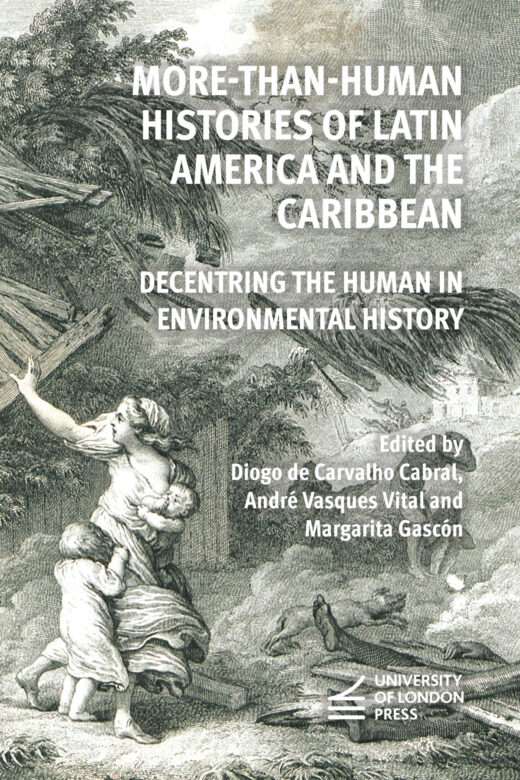
More-Than-Human Histories of Latin America and the Caribbean
Diogo de Carvalho Cabral
André Vasques Vital
Margarita Gascón
25 July 2024

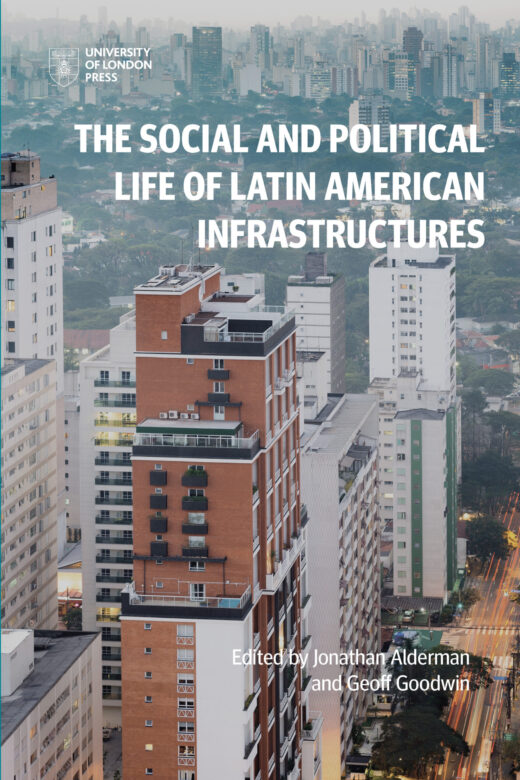
The Social and Political Life of Latin American Infrastructures
Jonathan Alderman
Geoff Goodwin
5 October 2022
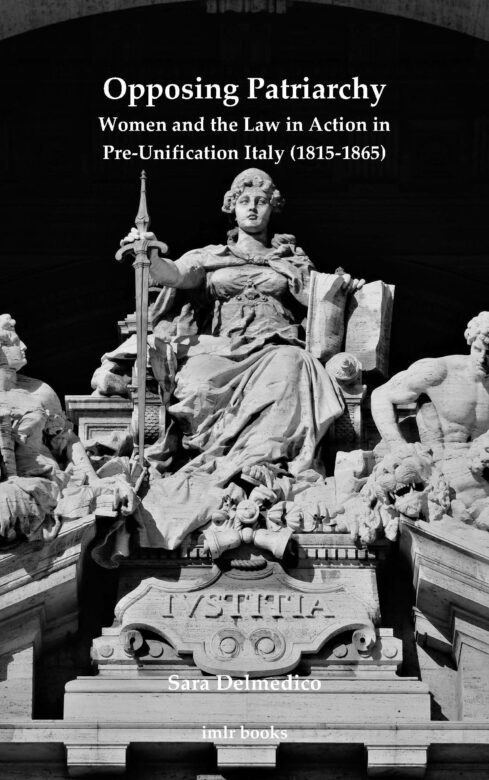
Opposing Patriarchy: Women and the Law in Action in Pre-Unification Italy (1815-1865)
Sara Delmedico
15 November 2021