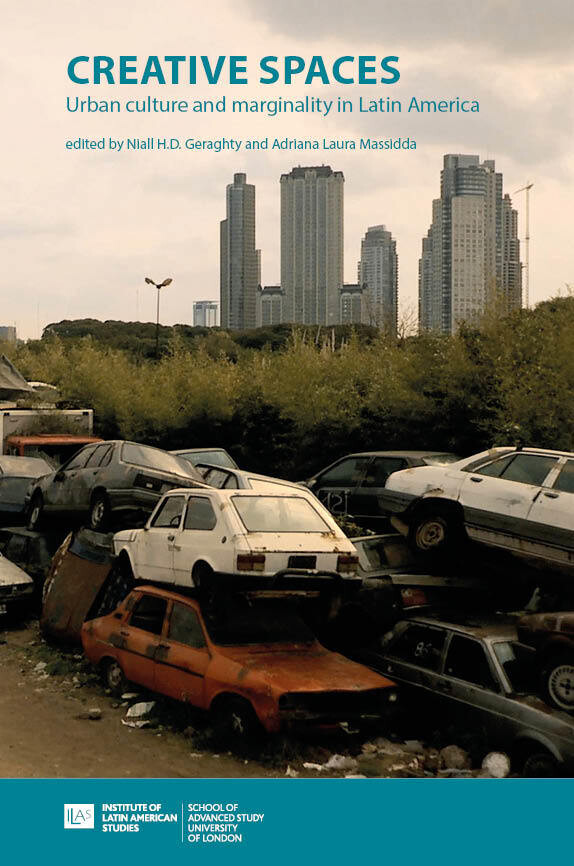

Creative Spaces
Urban Culture and Marginality in Latin America
Niall H.D. Geraghty (Editor), Adriana Laura Massidda (Editor)

Published in association with: Centre for Latin American and Caribbean Studies
Creative Spaces: Urban Culture and Marginality is an interdisciplinary exploration of the different ways in which marginal urban spaces have become privileged locations for creativity in Latin America. The essays within the collection reassess dominant theoretical notions of ‘marginality’ in the region and argue that, in contemporary society, it invariably allows for (if not leads to) the production of the new.
While Latin American cities have, since their foundation, always included marginal spaces (due, for example, to the segregation of indigenous groups), the massive expansion of informal housing constructed on occupied land in the second half of the twentieth century have brought them into the collective imaginary like never before. Originally viewed as spaces of deprivation, violence, and dangerous alterity, the urban margins were later romanticized as spaces of opportunity and popular empowerment. Instead, this volume analyses the production of new art forms, political organizations and subjectivities emerging from the urban margins in Latin America, neither condemning nor idealizing the effects they produce.
To account for the complex nature of contemporary urban marginality, the volume draws on research from a wide spectrum of disciplines, ranging from cultural and urban studies to architecture and sociology. Thus the collection analyzes how these different conceptions of marginal spaces work together and contribute to the imagined and material reality of the wider city.
I. Where are the margins? 1. The politics of the in-between: the negotiation of urban space in Juan Rulfo’s photographs of Mexico City Lucy O’Sullivan
2. The interstitial spaces of urban sprawl: unpacking the marginal suburban geography of Santiago de Chile Cristian Silva
3. Cynicism and the denial of marginality in contemporary Chile: Mitómana (José Luis Sepúlveda and Carolina Adriazola, 2009) Paul Merchant
II. The struggle for the streets 4. Community action, the informal city and popular politics in Cartagena (Colombia) during the National Front,1958–1974 Orlando Deavila Pertuz
5. On ‘real revolution’ and ‘killing the lion’: challenges for creative marginality in Brazilian labour struggles Lucy McMahon
6. Urban policies, innovation and inclusion: Comuna 8 of the city of Buenos Aires Anabella Roitman
III. Marginal art as spatial praxis 7. Exhibitions in a ‘divided’ city: socio-spatial inequality and the display of contemporary art in Rio de Janeiro Simone Kalkman
8. The spatiality of desire in MartKín Oesterheld’s La multitud (2012) and Luis Ortega’s Dromómanos (2012) Niall H.D. Geraghty and Adriana Laura Massidda
9. Afterword Creative spaces: uninhabiting the urban Geoffrey Kantaris
PDF: 9781908857699
EPUB: 9781908857491
Paperback: 9781908857484 / 280 pages / 229mm x 152mm
Niall H.D. Geraghty (Editor) 
Niall H.D. Geraghty is Associate Professor in Latin American Cultural Studies at University College London. Niall’s first book was The Polyphonic Machine: Capitalism, Political Violence, and Resistance in Contemporary Argentine Literature (University of Pittsburgh Press: 2019). He has published articles and book chapters on literature and film from Latin America, with a particular interest in memory, urban culture, and religion in the region. He is currently working on a project involving a radical re-examination of the work of Argentine artist León Ferrari (1920–2013) which also explores the interrelations between politics and religion in twentieth-century Argentina, and the potential correlations between contemporary philosophy and liberation theology.
Adriana Laura Massidda (Editor)
Adriana Laura Massidda is an architect, urban historian and activist focused on the history of Argentine villas (local name for shantytowns). Her main project to date analysed the transformation of the Buenos Aires Southwest floodplains into a landscape of villas and state-sponsored projects over an extremely convoluted historical period: the Cold War, and specifically the late 1950s and 1960s. In a later project she explored the environmental history of two housing estates in England set on top of former sewage farms: St Raphael's Estate (London) and Beaumont Leys (Leicester). Her current project looks into the 1967 flood in Buenos Aires, asking what it can tells us about climate (in)justice. She collaborates closely with grassroots communities for her work.
Subject: Languages, Cultures and Societies, Latin American and Caribbean Studies
BISAC codes: POL057000, SOC026030
Thema codes: AGTS, JBCC, JBSL
Keywords: diaspora, liminality, marginality, migration, population, urbanity
EPUB accessibility:
Accessibility summary
EPUB Accessibility Specification 1.1
Table of contents navigation
Index navigation
Single logical reading order
Short alternative textual descriptions
Full alternative textual descriptions
Visualized data also available as non-graphical data
Print-equivalent page numbering
Use of color is not sole means of conveying information
Next / Previous structural navigation
ARIA roles provided
Appearance of all textual content can be modified
All non-decorative content supports reading without sight
WCAG v2.2
WCAG level AA
This publication generally has been produced to meet WCAG Level AA, but it has not been checked for colour contrast within images. Please let us know if you find anything inaccessible within our book as we continue improving our process. You can contact us at uolp.accessibility@london.ac.uk.
More books in this subject area
Artificial Intelligence, Art and Indigeneity
Thea Pitman
Sandra De Berduccy
Andreas Rauh
17 September 2026

Postcards, Translators and Esperanto Pioneers
Guilherme Fians
Bernhard Struck
Claire Taylor
13 November 2025
Liberation Theology and Praxis in Contemporary Latin America
Pablo Bradbury
Niall H.D. Geraghty
20 February 2025
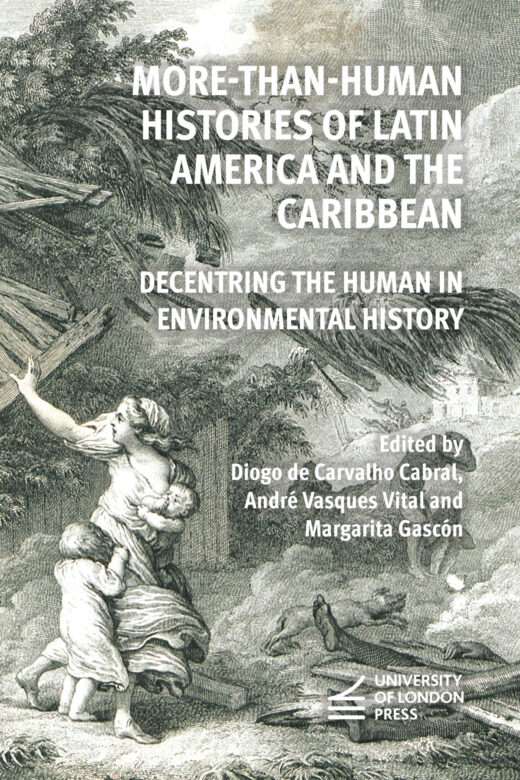
More-Than-Human Histories of Latin America and the Caribbean
Diogo de Carvalho Cabral
André Vasques Vital
Margarita Gascón
25 July 2024

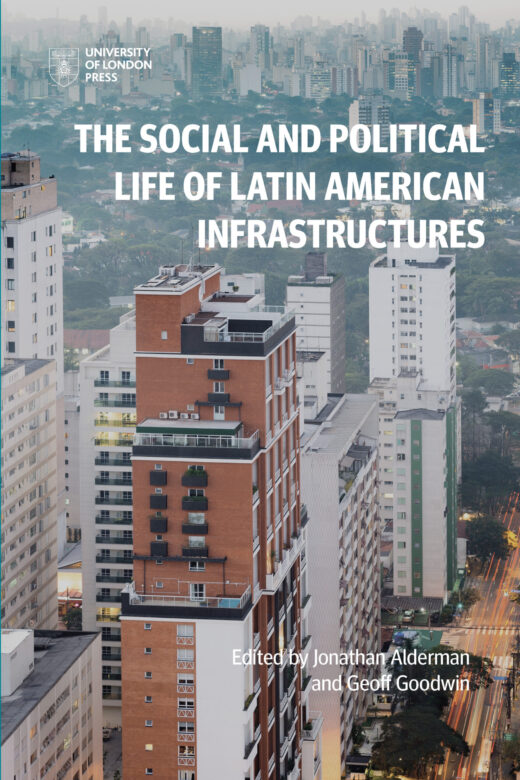
The Social and Political Life of Latin American Infrastructures
Jonathan Alderman
Geoff Goodwin
5 October 2022

Opposing Patriarchy: Women and the Law in Action in Pre-Unification Italy (1815-1865)
Sara Delmedico
15 November 2021